
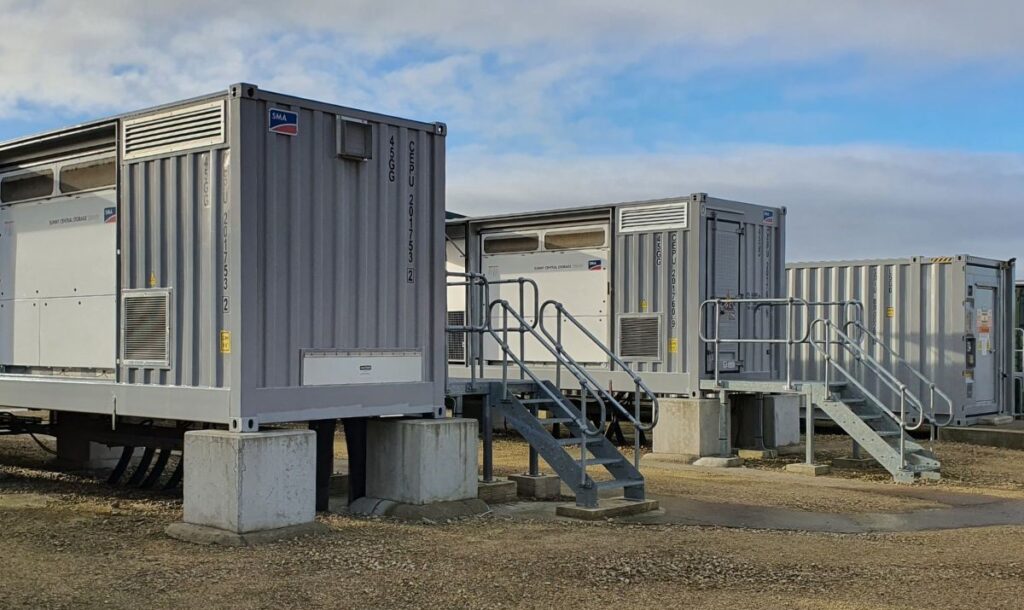
The government of Argentina has granted contracts for 667 MW of capacity focused on battery energy storage systems. It intends to surpass its initial 500 MW goal by approximately 30%. The AlmaGBA extensive BESS was initiated in February 2025, targeting a storage capacity of 500 MW. The initiatives will be established in the Buenos Aires region, with activities anticipated to start in 12 to 18 months. The allocation of the 667 MW target indicates robust confidence from investors and developers in Argentina’s market. BESS initiatives will assist in balancing energy generation from fluctuating renewable sources like solar and wind. This aids in decreasing curtailment and enhancing grid reliability. BESS delivers rapid-frequency response and voltage help, averting blackouts and enhancing power quality. This results in sharing of technology, knowledge, and skills. Helical anchors offer quick, cheap, and dependable foundation solutions for battery containers
BESS containers are heavy, weighing between 20,000 and 40,000 kg when fully loaded with batteries. Helical anchors are installed at the four corners of each container to transfer the load into the soil layers. Its main function is to provide a deep, stable foundation and overturn resistance for the BESS containers and other infrastructure. Helical anchors act in tension to resist uplift forces, tying the foundation to the ground. The installation torque of the helical anchor correlates to its load capacity, providing high-quality control. Helical anchors also function in power conversion systems, perimeter fencing, and weather monitoring stations.
Helical anchors in BESS project development
BESS units are often containerized systems with heavy battery racks and inverters. They demand robust support from components such as helical anchors. Helical anchors provide reliable and fast foundations in remote or challenging terrains. They ensure structural stability to speed up deployment and reduce environmental impacts. Helical anchors play a crucial role in scaling the renewable energy capacity and resilience of Argentina’s power sector. Here are the functions of helical anchors in Argentina.
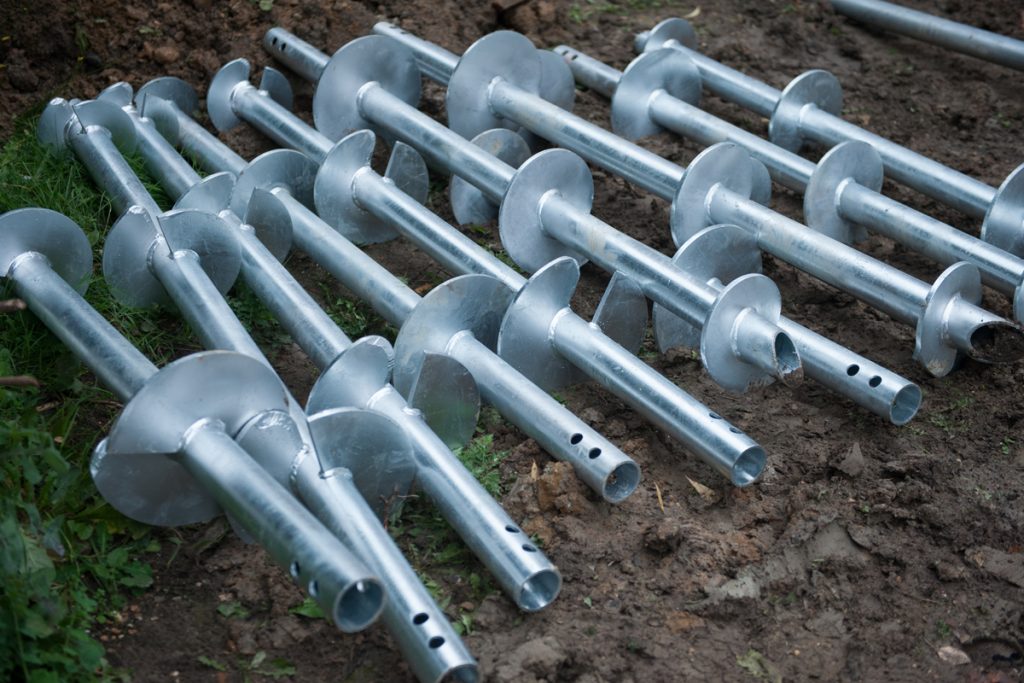
- Providing a strong and stable foundation—helical anchors fasten battery enclosures, transformers, and switchgear to the ground. They prevent settlement or shifting and ensure stability under static and dynamic loads.
- Enabling rapid deployment of projects—Argentina is integrating BESS alongside solar and wind parks to improve grid reliability. Helical anchors are faster to install compared to traditional concrete foundations. They reduce construction schedules to speed up renewable integration.
- Supporting grid resilience and reliability—foundational security is crucial for stabilizing the grid to balance wind and solar intermittency. Helical anchors reduce downtime caused by structural foundation failures. They also ensure longer durability of BESS installations with lower maintenance needs.
- Reducing costs and environmental impacts—helical anchors need less material and equipment. They can be installed with minimal ground disturbance to reduce environmental impact near renewable plants.
- Adapting to challenging soil conditions—helical anchors provide strong load-bearing capacity without extensive excavation. They also perform well in diverse soils, including loose or weak ground. Helical anchors reduce risks of structural damage that could disrupt storage operations.
Effects of increasing BESS capacity to 667 MW in Argentina
The upgrade of BESS capacity in Argentina transforms the nation’s strategy for energy storage and modernization of the grid. This speeds up Argentina’s energy shift, instills confidence in investors through market size, and boosts resilience. The 667 MW BESS enhancement boosts grid stability, renewable integration, and investor trust. These effects encompass
- Enhanced grid reliability—the Buenos Aires region faces congestion and is susceptible to peak demand pressure and outages. The rise in capacity provides the grid with extra buffering strength to enable batteries to stabilize demand surges.
- Greater renewable integration—an expanded BESS portfolio offers firming capacity, enhancing the dispatchability of renewables. The 667 MW capacity could capture surplus solar energy at noon and distribute it during peak evening hours.
- Improved energy security and independence—the BESS fleet lowers dependence on fossil fuel peakers. It also reduces exposure to fuel price fluctuations and supply uncertainties. This aligns with Argentina’s comprehensive energy shift and carbon reduction efforts.
- Confidence in the economy and investments—greater capabilities draw in international developers, financiers, and tech suppliers. This enhances Argentina’s status as a prominent participant in the South American storage sector.
- Employment generation and regional supply chains—BESS initiatives consist of construction activities, electrical setup, maintenance, and digital integration. It also encourages the establishment of local manufacturing and assembly for enclosures, transformers, and wiring