
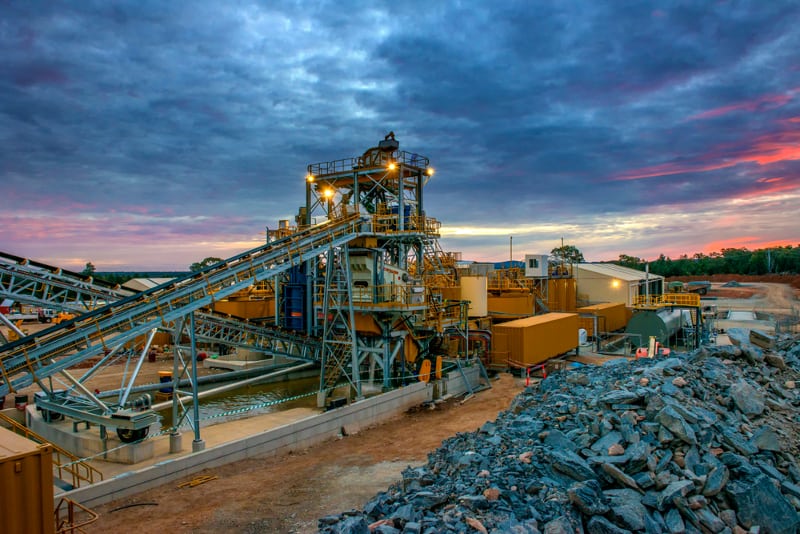
Power Minerals in Argentina is set to reactivate copper and gold exploration at the Santa Ines project in Argentina. The company has identified a high-priority target at about 600 m depth sitting beneath mineralization. This reflects a broader recalibration underway across the global mining sector driven by sustained strength in copper and gold prices and renewed investor growth. Copper prices are in demand due to demand from electrification, renewable energy systems, electric vehicles, and grid expansion. The dual-price environment materially improves project economics for polymetallic systems where copper offers industrial value and gold enhances cash-flow potential. The reactivation increases the chances of delivering value-accretive discoveries or positioning the project for partnership with larger operators seeking copper exposure. The mining infrastructure demands robust components such as the anchor shackles.
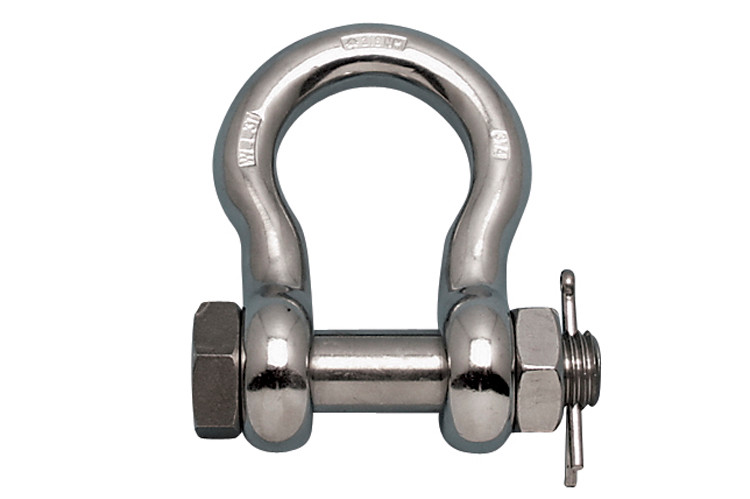
An anchor shackle is a U-shaped piece of metal with a removable pin that connects two components, like a wire rope sling, to a lifting eye. Its bow shape allows for multi-directional loading and reduces stress on connected ropes. The anchor shackle secures drilling equipment and casing and helps hoist and position drill rods, casings, and the mast sections of drill rigs. Shackles connect lifting slings to the casing pipes used to prevent hole collapse. Shackles lift heavy liners in and out during change-outs, lifting slurry pumps, agitators, and other heavy plant equipment. Anchor shackles serve as anchor points for fall arrest systems, safety berms and barriers, and securing ventilation ducting. Using anchor shackles in copper and gold mining enhances the safety, efficiency, and maintainability of mining operations.
Specifications for anchor shackles used in copper and gold mining infrastructure
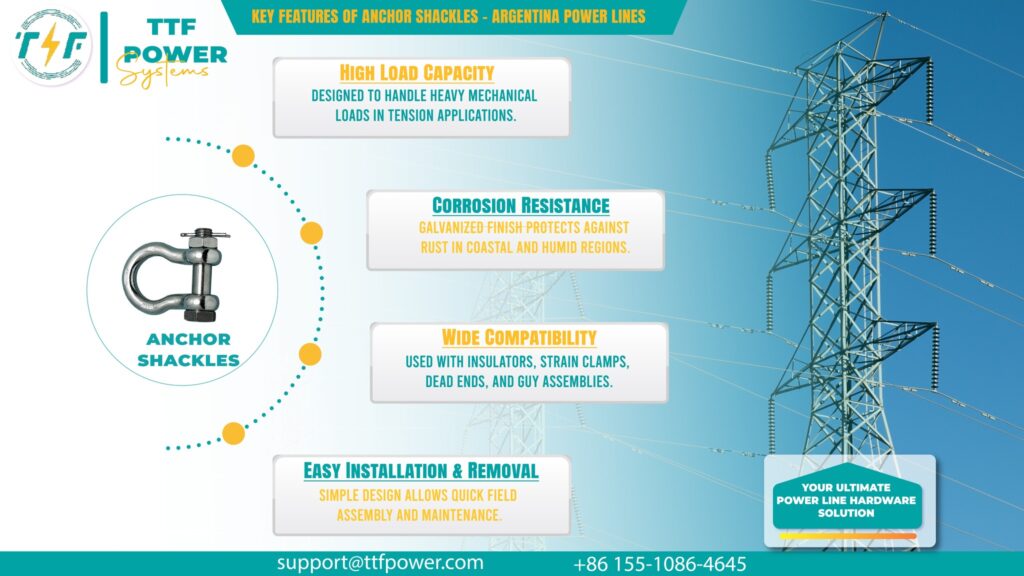
Anchor shackles connect lifting equipment, structural supports, and tensioned systems under high mechanical and environmental stress. They have specifications governed by safety, durability, and compliance requirements in open-pit and underground mining operations. The shackles are from materials that provide high tensile strength, fatigue resistance, and impact toughness. The anchors are also specified by working load limit to account for shock loading, vibration, and misalignment. Typical parameters include design safety factors, load direction, and fatigue considerations. The key dimensional requirements include pin diameter and shear capacity, bow radius, and thread engagement. Its pin configuration includes bolt-type shackles, screw-pin shackles, and pin material strength. Most anchor shackles have protective treatments that include hot-dip galvanizing, electro-galvanizing, and epoxy-coated finishes. Anchor shackles in mining infrastructure must comply with recognized international standards. TTF Certified anchor shackles ensure operational safety and long-term reliability in copper and gold mining in Argentina.
The anchor shackle serves important functions in the copper and gold mining infrastructure of Argentina
Anchor shackles perform structural and operational functions in copper and gold mining infrastructure. They serve in mining systems exposed to high mechanical loads, seismic activity, altitude-related stress, and aggressive environmental conditions. The anchors provide safety interfaces that enable load transfer, alignment, and modularity across mining assets. Key functions include:
- Load transfer and secure connections – the anchor shackle in copper and gold mining infrastructure transfer tensile and shear loads between components. They connect wire ropes, chains, lifting slings, and structural lugs under high static and dynamic loads.
- Lifting and hoisting operations – anchor shackles are ideal for lifting, rigging, and material handling across open-pit and underground mines. They provide a certified connection point between cranes, winches, and heavy components. These connections are crucial during installation, maintenance, and equipment relocation.
- Structural anchoring and stabilization – forged steel anchor shackles function as mechanical anchoring elements that stabilize structures exposed to vibration and wind loading. They anchor guy wires and bracing systems, connect tension rods, and secure flotation cells.
- Modular construction and maintenance efficiency—modular construction in modern mining projects reduces on-site assembly time. Using anchor shackles enables temporary connections during construction and reconfiguration of infrastructure.
Uses of copper and gold in Argentina’s energy sector
Copper and gold minerals support power generation, transmission, electrification, and emerging energy technologies. These minerals are ideal as Argentina expands renewable capacity, modernizes its grid, and seeks greater energy security. Key uses include:
- Power generation infrastructure—copper serves in generators and turbines, rotor windings, and transformers.
- Transmission and distribution networks – copper works in high-voltage and medium-voltage cables, substations and grounding systems.
- Renewable energy systems—copper is ideal in solar PV plants, wind turbines, and energy storage systems. Anchor shackles secure infrastructure and projects supporting renewable energy generation.
- Electrification and green hydrogen – these minerals underpin electric vehicle charging infrastructure, rail electrification, and green hydrogen electrolyzers. These applications align with decarbonization and industrial electrification strategies.