
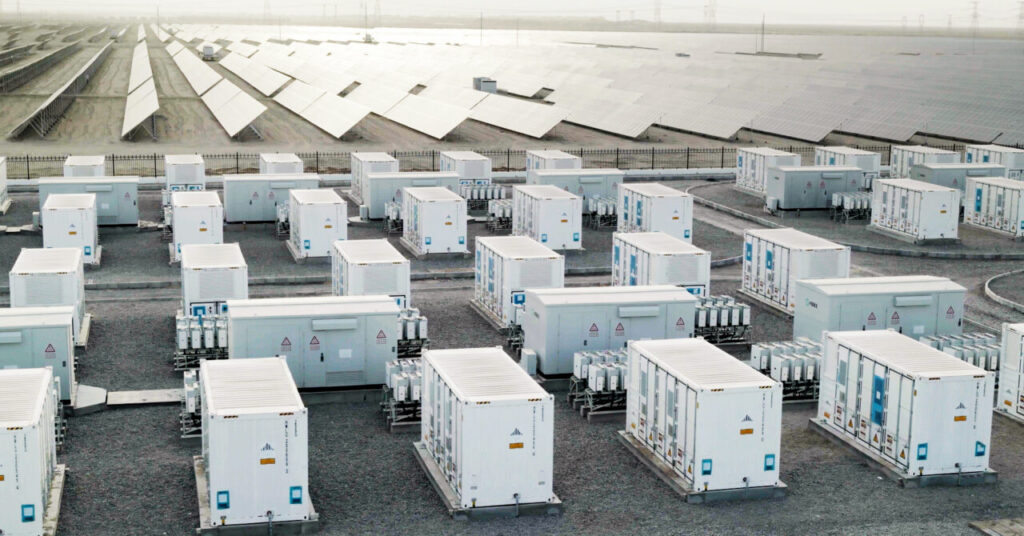
Argentina has awarded 20 battery energy storage system (BESS) projects to five developers under the AlmaSADI tender. This project has an estimated investment of $700 million to strengthen the national grid outside the Buenos Aires metropolitan area. The 20 projects total 700.5 MW across nodes of the SADI. The projects are across seven regions: Buenos Aires province (185 MW), Northwest Argentina (150 MW), Chaco-Formosa in the northeast (161.5 MW), Misiones-Corrientes in the northeast (50 MW), Entre Ríos (50 MW), Santa Fe (36 MW), and the Pampa Region (68 MW). The AlmaSADI tender aims to improve the flexibility and resilience of Argentina’s electricity grid through large-scale battery storage. The projects will strengthen transmission networks where grid congestion and renewable expansion are challenged. BESS provides backup power to reduce outages, improve voltage stability, and enhance system resilience. This development will cause the need for robust power line hardware, like bolted cable spacers.
Bolted cable spacers ensure the safety and reliability of the large transmission lines connecting the BESS to the power grid. The spacers offer mechanical and electrical protection for stable and high-power transmission. Spacers in high-voltage transmission lines hold the conductors at a fixed distance to prevent them from clashing. This protects against shot circuits, phase-to-phase contact, and insulation breakdown. Cable spacers provide a rigid mechanical constraint to absorb and redistribute impulsive forces. By stabilizing conductors, the spacers dampen vibrations, reduce fatigue, and extend the lifespan of the cables and their terminations. They help ensure that the inductance and capacitance of each sub-conductor in a bundle are equal. This allows the current to divide equally and prevent individual cables from overheating.
Quality assurance for the bolted cable spacers used in BESS infrastructure
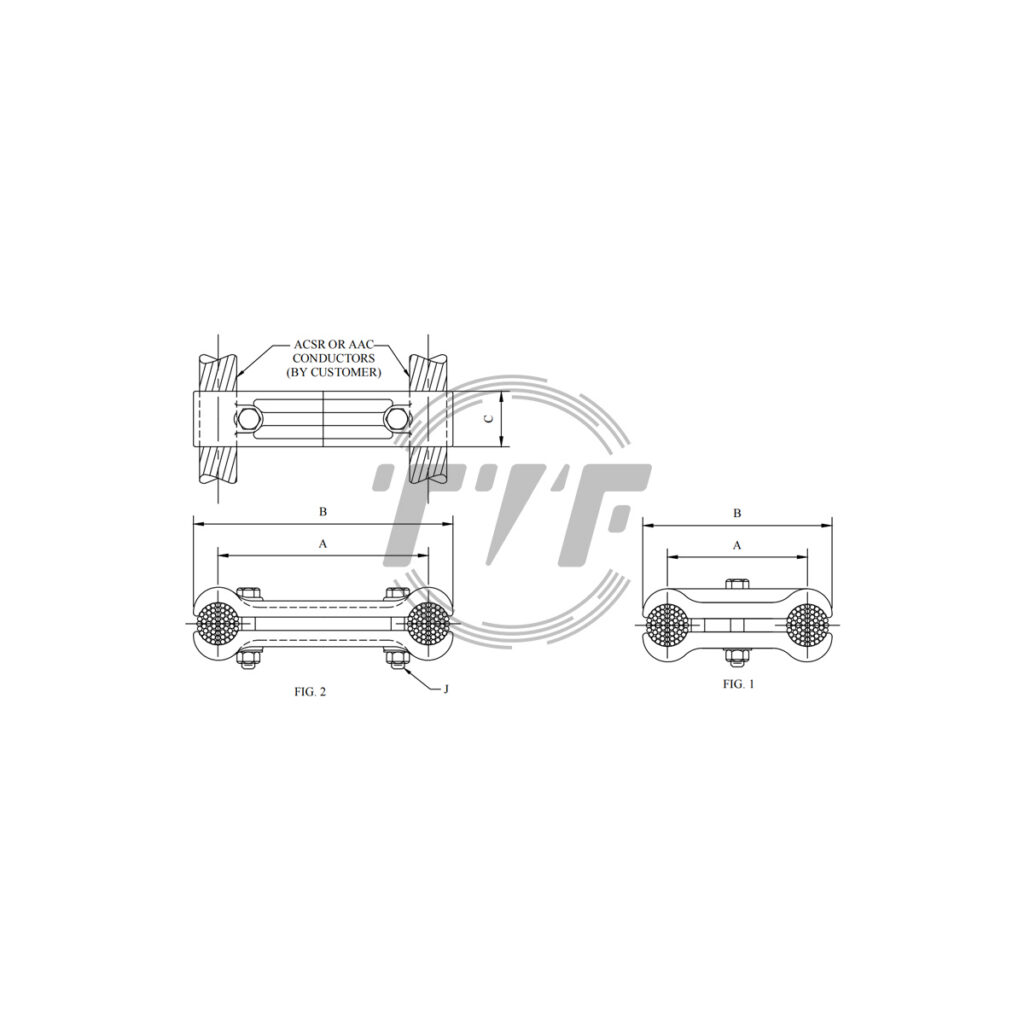
Components within the electrical infrastructure supporting BESS must meet strict quality standards. Bolted cable spacers maintain cable integrity, electrical safety, and system reliability. Conducting quality assurance for the spacers ensures they withstand the demanding operating conditions of the utility-scale BESS installation. Bolted cable spacers maintain the correct spacing between adjacent power cables, prevent cable movement caused by electrodynamic forces, and reduce mechanical stress. QA helps detect defects that cause failures leading to cable insulation damage, overheating, electrical faults, and system downtime. Quality assurance ensures that each spacer meets strict mechanical, electrical, and environmental performance requirements before deployment in BESS infrastructure. The QA process includes raw material verification, dimensional inspection, mechanical strength testing, corrosion resistance testing, and electrical insulation testing. High-quality bolted cable spacers will improve system safety, enhance thermal performance, and ensure reliability of the electricity network.
The roles of bolted cable spacers in BESS integration with grid infrastructure
Bolted cable spacers connect battery systems to substations and the national transmission network. They maintain electrical reliability, operational safety, and system performance. Here are their key functions in the infrastructure.
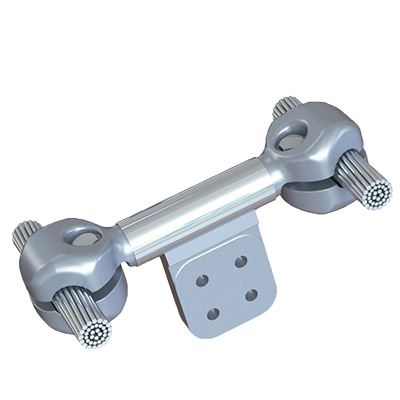
- Maintaining proper cable separation—the spacers maintain spacing between power cables carrying electricity between battery containers, power conversion systems, inverters, transformers, and grid interconnection substations.
- Controlling electrodynamic forces during fault conditions – electromagnetic forces between conductors develop during short circuits. Bolted cable spacers restrain cable movement, absorb mechanical forces, and maintain cable alignment.
- Supporting high-current transmission—bolted cable spacers provide stable cable positioning, uniform cable routing, mechanical support, and reduced stress on cable terminations. This helps maintain reliable power transfer during charging and discharging operations.
- Improving thermal management – properly spaced cables allow natural airflow, reduce heat accumulation, lower conductor operating temperatures, and improve cable ampacity.
Importance of BESS project development in Argentina’s energy sector
The recent AlmaSADI tender awarded 700.5 MW of storage capacity across 20 projects. It reflects a strategic effort to strengthen the grid, integrate more renewable energy, and improve energy security. The impacts of BESS projects on Argentina’s energy sector include:
- Strengthening grid reliability – Argentina’s power system faces challenges from transmission constraints, peak demand, and regional imbalances between generation and consumption. BESS stabilizes grid frequency, supports voltage control, and improves system resilience.
- Renewable energy integration – BESS enables storage of excess renewable generation, delivery of power, and reduction of renewable curtailment.
- Reducing transmission congestion – most transmission lines may become overloaded. BESS absorbs excess electricity and releases it when transmission capacity is available.
- Improving energy security – Argentina’s electricity system must manage seasonal demand fluctuations, generator outages, and weather-related disruptions.
- Modernizing the national grid—the AlmaSADI initiative focuses on strengthening the Argentine Interconnected system (SADI). This creates a more flexible, decentralized, and intelligent power system capable of handling growing renewable generation.