
Brazil’s energy storage market is transitioning from a demonstration-focused industry to a sustainable and operational sector. An increasing number of developers, utility firms, industrial clients, and renewable energy businesses are putting money into extensive battery storage to enhance grid dependability and incorporate renewable energy sources. The rise in orders for battery systems indicates the increasing confidence in energy storage as an essential part of Brazil’s developing power system. During the initial quarter of 2026, an extra 504 MWh of battery storage orders were made. This led to the total volume of battery systems sold in Brazil hitting 1.9 GWh. Battery systems enhance grid adaptability by balancing supply and demand, regulating voltage variations, offering frequency control, and bolstering transmission systems. These advancements encompass equipment production, civil engineering, electrical setup, and grid connectivity. These links depend on strong hardware like formed wire spool ties.
Formed wire spool ties secure conductors to insulators on utility poles or transmission towers. They provide a reliable and durable method for attaching wires to their supporting structures. The spool tie holds conductors in place on various types of insulators to ensure the physical stability of the power line. In BESS projects, the spool ties maintain the mechanical integrity, electrical reliability, and performance of overhead distribution networks. Formed wire spool tie serve in overhead distribution lines, pole-mounted transformer installations, renewable collector systems, and utility grid interconnection networks.
Quality assurance for formed wire spool ties used in battery storage systems
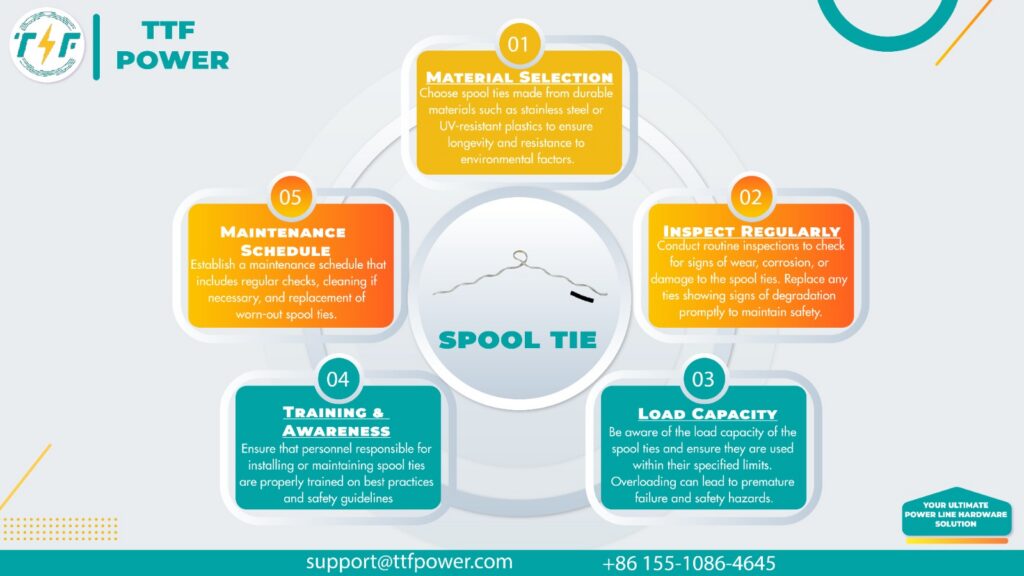
Formed wire spool ties hold overhead wires in place on insulators for distribution and sub-transmission lines. These help connect BESS facilities to substations and the grid. Quality assurance ensures the ties provide consistent mechanical performance, electrical reliability, and durability under diverse environmental conditions in Brazil. QA ensures that formed wire spool ties maintain secure conductor attachment, protect conductors from abrasion and fatigue, and withstand mechanical and environmental stresses. High-quality spool ties improve the reliability of overhead interconnection systems that support renewable energy integration. QA for the spool ties covers raw material inspection, dimensional accuracy inspection, mechanical strength testing, and conductor compatibility testing. It also includes corrosion resistance testing, installation performance testing, and vibration and fatigue testing.
Functions of the formed wire spool ties in battery storage and interconnection systems
Formed wire spool ties fasten conductors to spool insulators on overhead distribution lines. The spool ties are from high-strength aluminum alloy, galvanized steel, or other corrosion-resistant materials. They provide uniform conductor support without causing localized stress or abrasion. Formed wire spool ties maintain the mechanical integrity, electrical reliability, and performance of the BESS networks. Here are their key functions in the interconnection infrastructure.
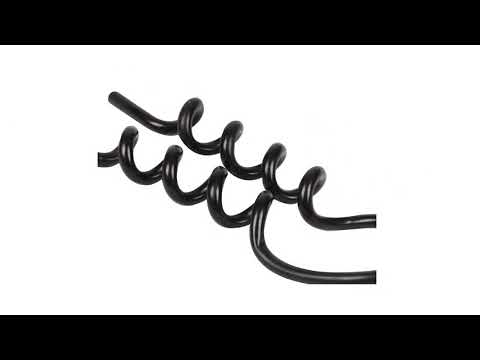
- Securing conductors to spool insulators—the spool ties attach overhead conductors to spool insulators on poles. This ensures that conductors remain securely positioned, proper conductor alignment, and movement caused by wind.
- Supporting BESS grid interconnection – formed wire spool ties support overhead distribution lines connected to BESS, maintain conductor stability, and improve the mechanical reliability of overhead line infrastructure.
- Distributing mechanical loads—the spool tie design distributes clamping pressure uniformly and reduces concentrated stress points. This helps extend both conductor and hardware service life.
- Protecting conductors from damage—formed wire spool ties protect conductors by reducing surface wear and preventing strand damage.
- Improving electrical reliability—stable conductor positioning contributes to electrical system performance. The spool ties maintain consistent conductor contact, prevent conductor displacement, and support continuous power delivery.
Obstacles to tackle in Brazil for effective integration
The development of battery energy storage systems in Brazil is driven by the swift expansion of renewable energy and a rising need for grid flexibility. Nevertheless, the developers must tackle many challenges to do extensive and dependable integration of battery storage within Brazil’s transmission and distribution systems. These obstacles involve:
- Restricted income sources—project developers need compensation for extra services, participation in capacity markets, revenues from grid support services, and rapid frequency response.
- Significant upfront capital expenses—large–scale battery systems need initial investments for battery units, power conversion systems, transformers, grid connection infrastructure, and fire safety systems.
- Transmission and distribution network limitations—renewable energy initiatives frequently occur in isolated regions. This results in constrained transmission capacity, grid congestion, postponed transmission expansion, and interconnection relays.
- Recycling batteries and managing their end-of-life—Brazil needs to create efficient systems for recycling and disposal. Effective recycling minimizes environmental effects while reclaiming important resources.