
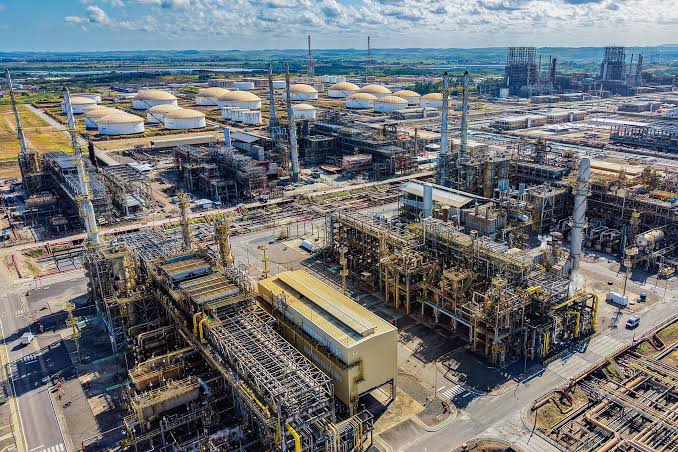
Recently, Ecopetrol announced that through its subsidiary Ecopetrol Investments do Brasil Ltda, it has completed the acquisition of a controlling interest equal to 51% of the voting capital share of Brava Energia. This acquisition strengthens the position of a major regional economy company in the oil and gas markets. The transaction also gives Ecopetrol exposure to Brazil’s upstream hydrocarbons industry through Bravia’s producing assets and development opportunities. Brava Energia brings a substantial reserve and production portfolio to the Ecopetrol Group. Access to these resources can support continued investment in exploration, field development, production optimisation and infrastructure. Additionally, the increase in renewable energy in the country supports the hydrocarbon sector, balancing the energy system. The growing oil and gas production rely on infrastructure like offshore production systems, pipeline processing facilities, electrical systems, and monitoring networks. These interconnections demand robust hardware, including copper split bolt connectors.
The split bolt connector creates reliable, safe, and modifiable electrical connections for grounding and bonding systems. The connector also supports the electrical infrastructure that protects the equipment and personnel in these environments. Copper split bolt connectors link conductors for grounding and bonding to prevent sparking. The connectors are from high-copper alloys with electro-tin plating. This provides high conductivity while resisting corrosion, rust, and cracking in oil and gas infrastructure. Copper split bolt connectors are ideal for underground grounding grids supporting oil and gas infrastructure in Brazil.
Quality assurance for copper split bolt connectors in Brazil’s oil and gas infrastructure
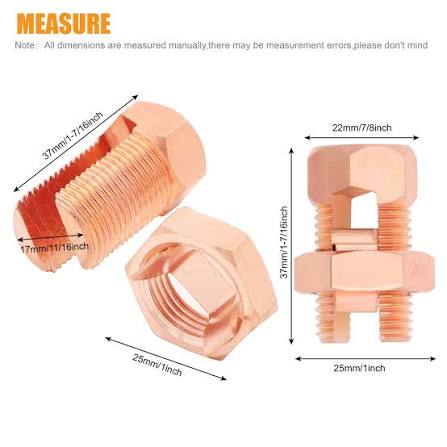
Conducting quality assurance for copper split bolt connectors is crucial since they form part of grounding, bonding, and electrical continuity systems. QA prevents failures that lead to contact resistance, corrosion, or compromise to the grounding path. It also ensures that the connectors meet Brazilian electrical requirements to provide electrical continuity, enough current-carrying capacity, corrosion protection, and mechanical security. QA for the connectors cover material quality verification, dimensional inspection, electrical conductivity, contact resistance, mechanical strength testing, and environmental and application testing. During split bolt connector installation, QA verifies the correct connector model, correct conductor sizes, correct conductor insertion, proper positioning of the split bolt and proper documentation and inspection records. A robust QA programme ensures that the copper split bolt connector delivers low-resistance electrical connections and enough mechanical strength. Quality assurance is important in Brazil’s demanding oil and gas operating environments where electrical infrastructure must remain reliable.
Functions of the copper split bolt connector in oil and gas infrastructure
Copper and split-bolt connectors are mechanical electrical connectors that join, tap, or bond conductors while maintaining electrical continuity. They are crucial for grounding, bonding, electrical continuity, and lightning protection-related connections. Here are the key roles of the split bolt connector in oil and gas infrastructure.
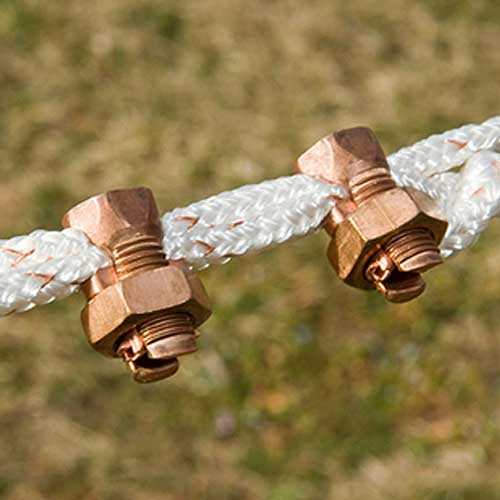
- Grounding conductor connections – the connector joins grounding conductors to create a continuous grounding network. Grounding networks interconnect electrical equipment, grounding conductors, and grounding electrodes.
- Equipotential bonding – copper split bolts establish equipotential bonding between designated conductive parts. The connectors established a low-impedance electrical path between designated bonding conductors and metallic components.
- Maintaining electrical continuity – the split bolt compresses conductors together to create a conductive interface. This helps maintain stable electrical continuity across the connection.
- Connecting branch grounding conductors – the connector can connect a branch conductor to a continuous grounding conductor. This is crucial when extending grounding networks around electrical equipment, control panels, metallic structures, and grounding grids.
Operational and financial profile of Brava Energia for the Ecopetrol Group
The acquisition of the 51% in Brava Energia gives Ecopetrol access to a Brazilian oil and gas platform with offshore and onshore production. Brava’s recent operating and financial performance makes the company relevant to Ecopetrol’s goals of expanding production, reserves and geographic diversification in Brazil. Its roles in the sector include:
- Strong production platform – increased production by Brava Energia provides a productive asset base rather than relying on underdeveloped exploration opportunities.
- Diversified onshore and offshore portfolio – Brava’s portfolio covers offshore and onshore assets that expose Ecopetrol to different producing regions and operating environments.
- Significant revenue generation – the financial performance shows that Brava has enough operating business capable of generating significant revenue and EBITDA.
- Strengthening financial position – Brava’s report shows net debt of R$7.6 billion, while leverage declined from about 2.8x at the end of 2024. This reduction brings Ecopetrol an operating business whose balance sheet had been moving towards greater financial flexibility.