

Peru intends to increase yearly copper output by approximately 1 million metric tons via new mining initiatives. Chinese and American firms are investing in the race for essential minerals in South America. The government of Peru is dedicated to eliminating 100 permitting requirements in the mining industry to draw in these investments. Aside from its mineral resources, Peru possesses mining infrastructure and investment potential that can bolster the growth of renewable energy, electricity transmission, and contemporary power distribution systems. To meet its objectives, Peru needs to tackle falling ore grades, enhance mining efficiency, bolster electricity infrastructure, and guarantee that new mining projects can use dependable and sustainable energy sources. Copper mining in Peru underpins the supply chain essential for sustaining solar, wind, and hydropower production. Copper is vital in power cables, transformers, switchgear, clevis brackets, and electrical connectors.
Clevis brackets in electrical mining infrastructure secure and protect the power outlet. It anchors the socket against physical stress and ensures a stable electrical connection in diverse environments. Mining equipment generated heavy vibration that affected the operations. The clevis bracket anchors the socket to machinery, walls, or structural supports. This prevents the connection from loosening that may cause arcing. The brackets ensure the plug cannot be connected while the circuit is energized. Clevis brackets help maintain the integrity of environmental seals against dust and water ingress. Some of the brackets are designed to allow the socket to slide or move. This allows workers to reposition the power source where needed the most.
Quality assurance for clevis brackets in Peru’s electrical system

Clevis brackets join and support hardware in electrical infrastructure, including overhead lines, substations, and grounding systems. Enhancing quality assurance for the brackets ensures they operate under mechanical loads, vibration, dust, moisture, and temperature variation. Reliable clevis brackets ensure mechanical reliability, secure connections, reduced maintenance needs, and improved installation consistency. QA prevents failures that can contribute to conductor movement, structural instability, equipment damage, or service interruption. QA ensures that each bracket meets its specified material, dimensional, mechanical, corrosion-resistance, and manufacturing requirements. The QA process checks material verification, dimensional accuracy, mechanical load testing, corrosion protection, and weld quality. During production, the manufacturers inspect clevis brackets throughout the process. This helps identify defects earlier and reduce the probability of nonconforming components reaching the mining site.
The roles of clevis brackets in electrical mining networks
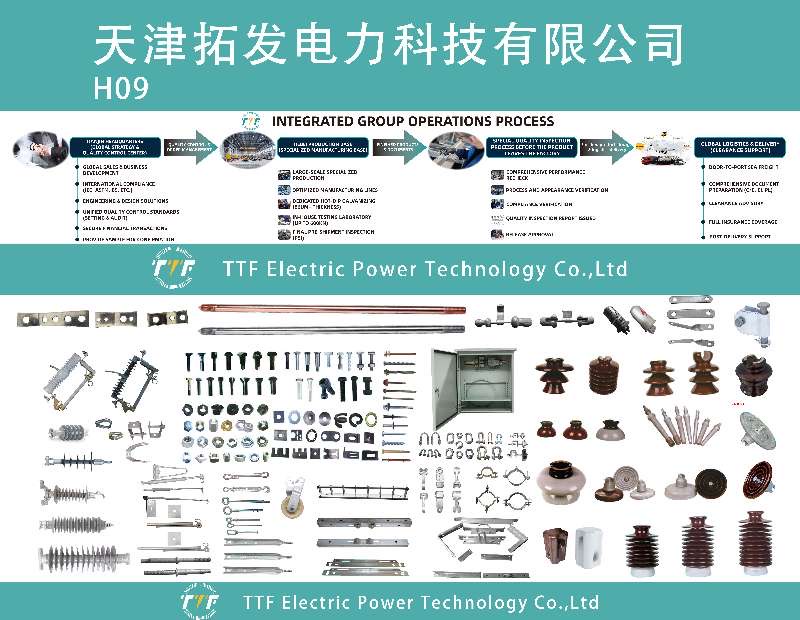
Clevis brackets in mining networks connect, position, and secure different elements within electrical infrastructure. They support overhead distribution networks, substations, utility structures, grounding systems, and electrical equipment supplying the mining operations. Here are their key roles in electrical networks.

- Connecting electrical line hardware—clevis brackets provide connection points between insulators, yoke plates, and suspension assemblies. The clevis-and-pin design allows connected components to be assembled securely while accommodating the movement needed.
- Supporting overhead conductors—the brackets maintain conductor clearances and mechanical stability. They form part of the hardware assembly that supports conductors and maintains their designed position.
- Connecting insulator assemblies—the clevis connects insulators to crossarms, brackets, and yoke plates. They provide a mechanical interface that transfers loads between the insulator assembly and the support structure.
- Transferring mechanical loads—the brackets also help transfer tensile, vertical, and other mechanical loads between interconnected components. They contribute to the electrical support assembly.
- Supporting mining-site distribution infrastructure—mining operations need electrical networks to supply processing plants, pumping stations, and conveyors. The clevis brackets secure the hardware used in the overhead distribution structures delivering the power.
Effects of investments in Peru’s copper mining industry as permitting processes simplify
Peru is relaxing the regulations for mining permits, potentially transforming its copper mining industry by generating opportunities for foreign investment. Chinese and American investments cover various mining assets, funding structures, and strategic supply chain focuses. To boost copper production by one million tonnes each year, simplifying permitting processes in Peru may ease the transition of mining projects from planning and feasibility studies to construction and production. The energy and mines ministry has recognized 27 permit criteria for possible removal and an extra 14 for streamlining. This seeks to minimize administrative delays while maintaining environmental supervision. The connections among China, the USA, and Peru may ease the development of new initiatives and the growth of current activities.