
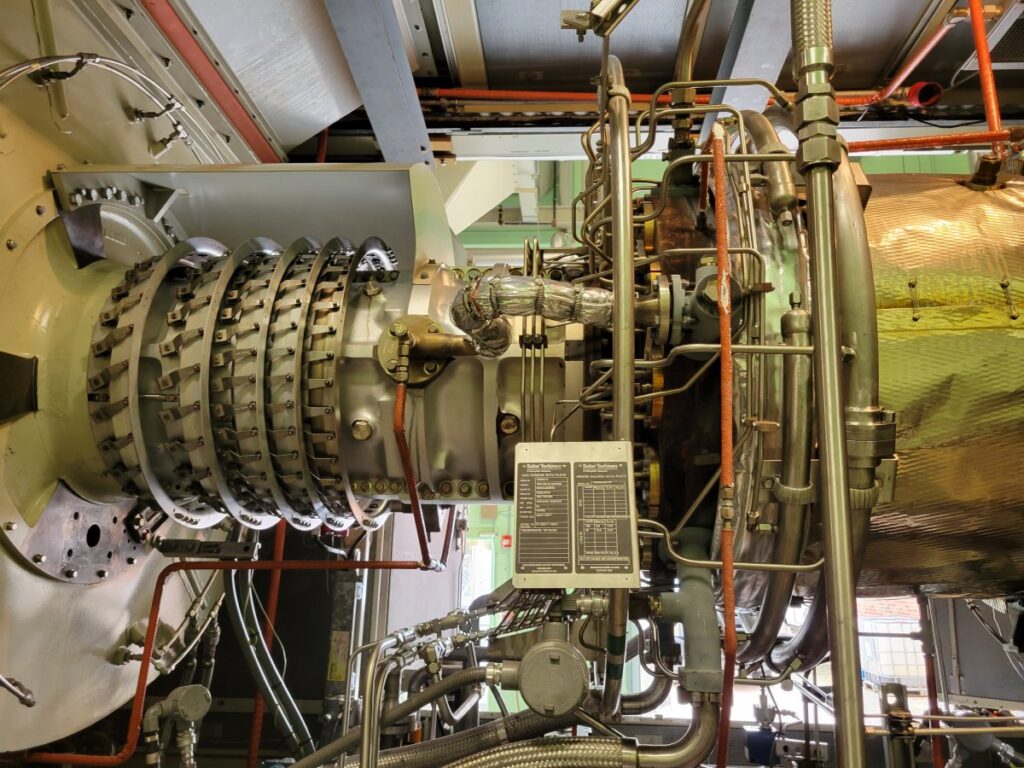
An energy technology company, Baker Hughes, secured a strategic order from San Matias Pipeline S.A. to supply three gas compression units for a natural gas pipeline project in Argentina. The order consists of three NovaLT™16 gas turbines equipped with three centrifugal compressors. It also consists of commissioning services, spare parts, special tools, and remote monitoring and diagnostic capabilities. This equipment will be installed at a gas compressor station near Allen, Rio Negro. It will support the transportation of natural gas from the Vaca Muerta formation to the Gulf of San Matias through a dedicated pipeline. This development supports gas infrastructure that enables secure, reliable, and lower-emission energy systems in Argentina. Natural gas strengthens energy security and enables scalable pathways to global LNG markets. The NovaLT™16 platform offers performance, efficiency, delivery advantages, and suitability for midstream gas compression applications. These developments will rely on robust cross plate anchors.
Cross plate anchors secure guy wires and utility poles supporting power lines for natural gas facilities. The anchors provide reliable, high-capacity anchoring for the overhead electrical and communications lines serving pipeline operations. They secure guy wires that support overhead power lines, control cables, and communication lines on poles. Cross plate anchors are installed in the ground to serve as the anchor point for the guy wires. The anchors offer high holding capacity that is crucial for the stability of tall utility poles. This prevents the poles from leaning to maintain the safe clearance and alignment of overhead power lines. These power lines supply energy to compressor stations, processing plants, and monitoring equipment. Cross plate anchors design, manufacture, and quality assurance will be showcased at the upcoming Canton Fair 2026 by TTF Power Systems.
Quality assurance for cross plate anchors for use in natural gas infrastructure in Argentina
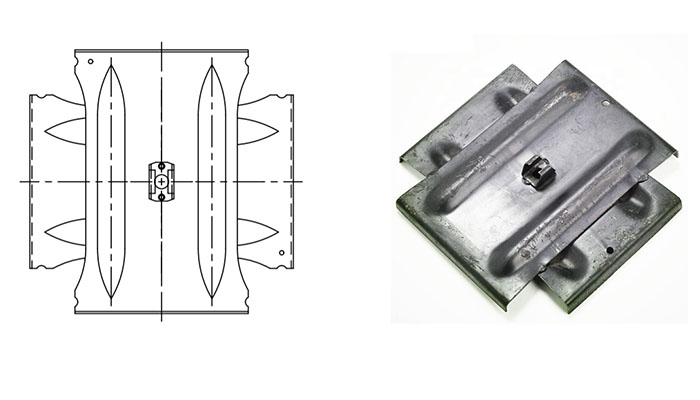
Quality assurance for cross plate anchors helps them stabilize guyed structures, pipeline supports, and ancillary equipment across long-distance transmission systems. Conducting quality assurance helps prevent failures that result in structural instability, pipeline misalignment, or service interruptions. The process begins by material verification through steel grade verification, chemical composition testing, and corrosion resistance validation. During manufacturing, the anchors undergo control through dimensional tolerances inspections, weld integrity, and surface finish checks. Cross plate anchors undergo mechanical performance testing aligned with project-specific requirements for high-pressure gas systems. TTF-certified cross plate anchors prevent corrosion-induced section loss, improper embedment, or overloading due to inaccurate design assumptions. The process integrates materials science, manufacturing control, geotechnical validation, and digital monitoring to ensure reliability under operational conditions.
Cross plate anchor functions in natural gas infrastructure
Cross plate anchors in natural gas infrastructure ensure the mechanical integrity and operational continuity of the gas transmission system. The anchors serve between structural engineering and geotechnics to ensure that pipelines and systems remain stable and aligned. Here are the functions of the anchors in natural gas infrastructure.
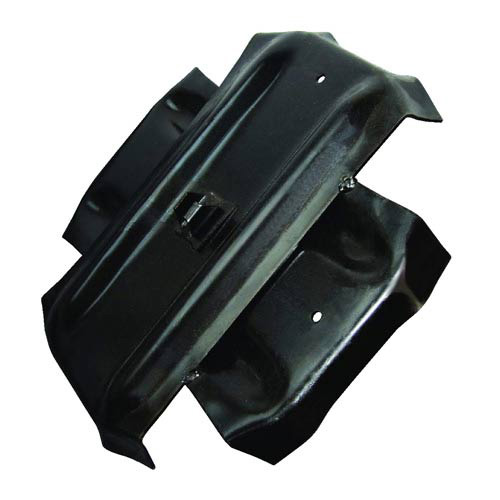
- Pipeline stability—cross plate anchors counteract uplift caused by groundwater or flooding. They also maintain pipeline embedment depth and alignment and prevent flotation-induced stress on welded joints.
- Lateral load resistance for guyed structures—cross plate anchors provide lateral resistance against wind and seismic loads, transfer tensile forces from guy wires, and maintain structural equilibrium under dynamic conditions.
- Anchorage for pipeline accessories—the anchors secure auxiliary components along pipelines. They ensure the elements remain fixed under operational loads such as vibration and pressure cycling.
- Load distribution in weak soils—the anchors increase bearing surface area, distribute loads evenly, and improve holding capacity.
- Resistance to thermal expansion forces—cross plate anchors act as restraint points in selected sections, limit excessive pipeline movement, protect weld integrity, and prevent buckling.
Gas technology infrastructure deployed in Argentina’s natural gas sector
The NovaLT™16 platform is a modern, mid-range industrial gas turbine engineered for mechanical drive applications in gas compression systems. It is crucial for pipeline infrastructure linking the Vaca Muerta shale formation. These include:
- Hybrid turbine design—this combines frame turbine robustness and aeroderivative flexibility. It enables high operational reliability under continuous load.
- Mechanical drive optimization for gas compression—the turbines are configured to mechanical drive to power centrifugal compressors.
- Advanced compressor-turbine integration—the NovaLT™16 units have the ability to start under full compressor load, stable operation, and optimized coupling for minimal energy loss between turbine and compressor.
- Combustion system and emission technology—the turbine incorporates a dry low emissions combustion system to reduce environmental impact.