
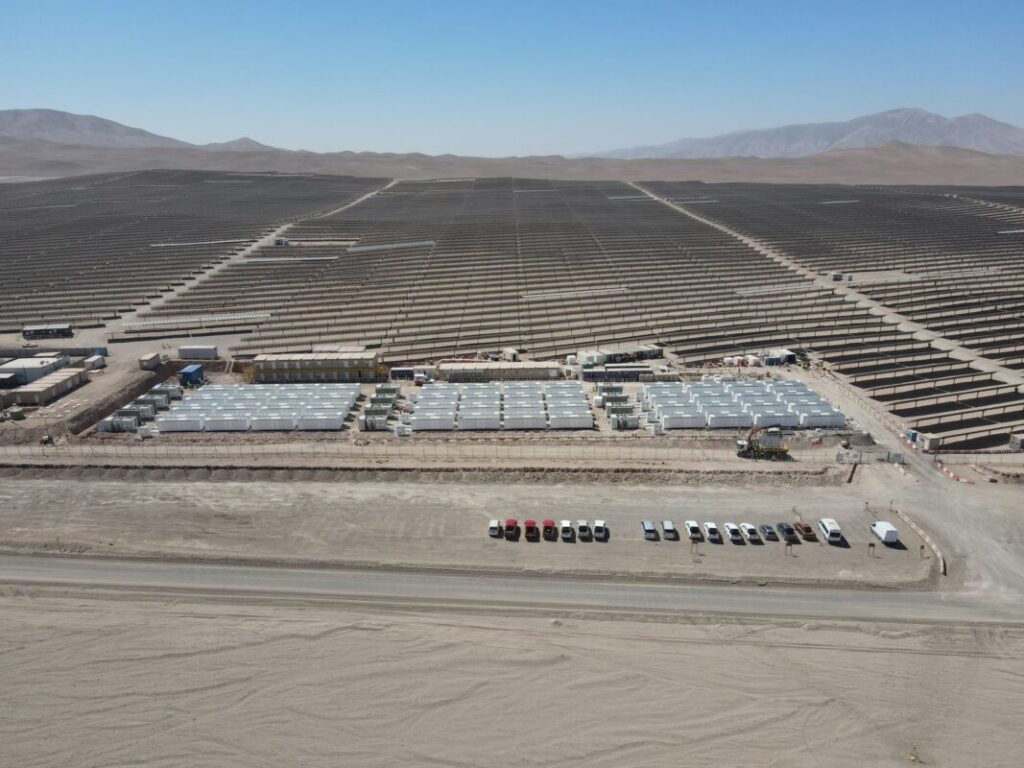
Chile’s energy sector continues to grow towards green energy sustainability and net-zero energy production. Acciona Energy announced the construction of a 1GWh battery energy storage system at its Malgarida PV complex. This region offers a 238MWp solar facility located in Chile’s Atacama Desert. The project will be one of the largest battery storage systems in South America. It will have a capacity of 200MW, enabling it to deliver 200MW of energy continuously. BESS will allow storage, management, and dispatch of photovoltaic energy produced at Malgarida across different time periods. Such development will strengthen reliability, boost solar use, and speed up the country’s path toward a resilient, carbon-neutral power system. Deadend pole bands terminate a conductor or static wire and withstand its full mechanical tensile load. It functions in the medium-voltage or high-voltage wiring connecting the BESS to the grid.
The deadend pole band functions at the termination points on the poles within the substation or at the grid connection point to anchor these lines. It allows the electrical lines within the project to change direction when necessary. The pole band can withstand the unbalanced lateral pull from the conductors at these points. It also provides a secure and code-compliant attachment point for the wires that connect to the project’s step-up transformer.
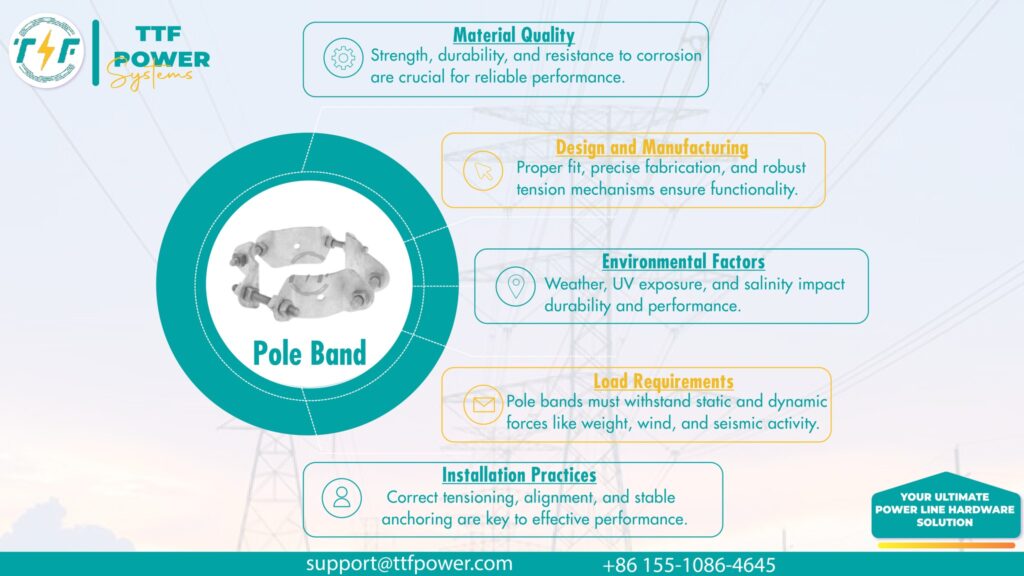
Deadend pole bands ensure structural integrity under mechanical loads. They withstand the constant tension, dynamic loads, environmental loads, and thermal loads. Pole bands prevent conductors from sagging excessively or swaying into equipment or other phases. It is crucial to observe proper installation to create a fixed point where a conductor is grounded and isolated. The connection point allows for easier work like re-tensioning conductors, adding new equipment, or expanding the switchyard.
Impacts of BESS project development in Chile’s energy sector
The abundant renewable resources in Chile’s Atacama Desert provide immense solar radiation for energy production. However, solar energy is intermittent and faces challenges such as midday oversupply, voltage instability, and transmission bottlenecks. The 1GWh storage system provides frequency regulation, inertia support, and peak shaving capabilities. This balances the grid without relying on fossil fuel peaker plants. BESS allows Malgarida to capture energy that would be wasted and increases project efficiency and protects revenue streams. BESS projects support construction jobs, local supply-chain engagement, and new opportunities for technical training in battery operations and digital energy management. These operations demand the use of hardware components such as deadend pole bands for secure connections.
Functions of the deadend pole bands in Acciona’s BESS project
The deadend pole band supports the structural and electrical reliability of overhead line systems supporting large-scale energy infrastructure. It supports the lines, feeders, and interconnection networks serving Acciona Energy’s 1GWh BESS development. The deadend pole band ensures the safe, durable anchoring of conductors as power from the facility flows to Chile’s grid. Here are the functions of the deadend pole band in BESS infrastructure in Chile.

- Provides mechanical anchorage for conductors—the deadend pole band is to anchor transmission conductors at pole termination points. The pole band ensures secure attachment of dead-end clamps, insulators, and other hardware.
- Distributes mechanical loads around the pole—the deadend pole band spreads the tensile load from conductors around the pole. It also protects the pole from stress concentrations that could lead to cracking.
- Supporting horizontal and vertical line angles—the transmission lines for hybrid solar-plus-storage projects must have substations and inverter-block layouts. Deadend pole bands enable the system to manage line deviations, maintain stable angles, and connect various sections of lines feeding the BESS and PV plant.
- Mounting for insulator strings—deadend pole bands serve as the mounting platform for insulator strings used in deadend configurations. It ensures proper insulation between conductors, stable alignment, and reduced risk of flashovers.
Potential challenges to address for the success of the BESS project
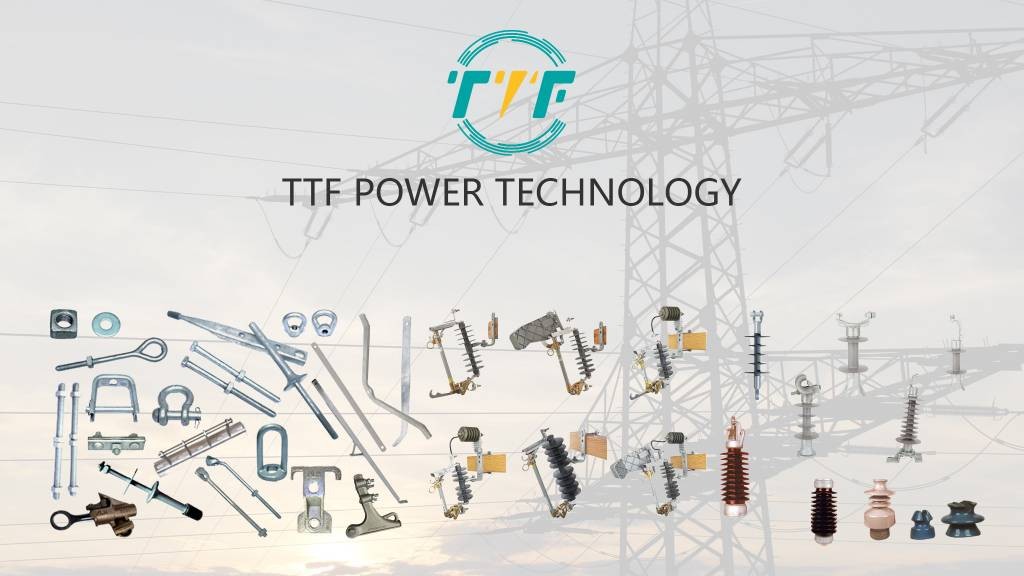
The BESS at the Malgarida photovoltaic complex is a crucial step toward Chile’s renewable-energy landscape. The success of the project depends on managing several technical, regulatory, environmental, and operational challenges. The company must address such challenges to ensure smooth integration, long-term performance, and greatest value for the Chilean grid. These challenges include grid integration, battery lifecycle, environmental conditions, permitting complexity, thermal runaway risks, and supply chain logistics. Use of power line hardware components such as deadend pole bands secures the transmission and BESS infrastructure safely. It secures communication networks between the BESS, PV plant, and the grid.