

Argentina has made efforts to become the first Latin American country to join the Small Modular Reactor Technology (FIRST) program, supported by the United States. This demonstrates the mutual commitment to deepening the civil nuclear energy partnership, advancing global energy security, and expediting the responsible deployment of advanced nuclear energy in South America. The program helps countries deploy small modular reactors (SMRs) with safety, security, and environmental standards. It also supports cooperation, knowledge sharing, capacity building, and framework strengthening. Argentina’s strong nuclear sector, including the CAREM reactor project, supports its movement. The country also seeks to expand uranium mining, SMR module development, and regulatory capacity. This development offers the country technology transfer, training, and assistance with feasibility studies. SMRs provide a low carbon footprint in supplying base-load electricity. Using E-span clamps in SMRs helps ensure the safe, reliable, and efficient distribution of power from the reactor to the grid.
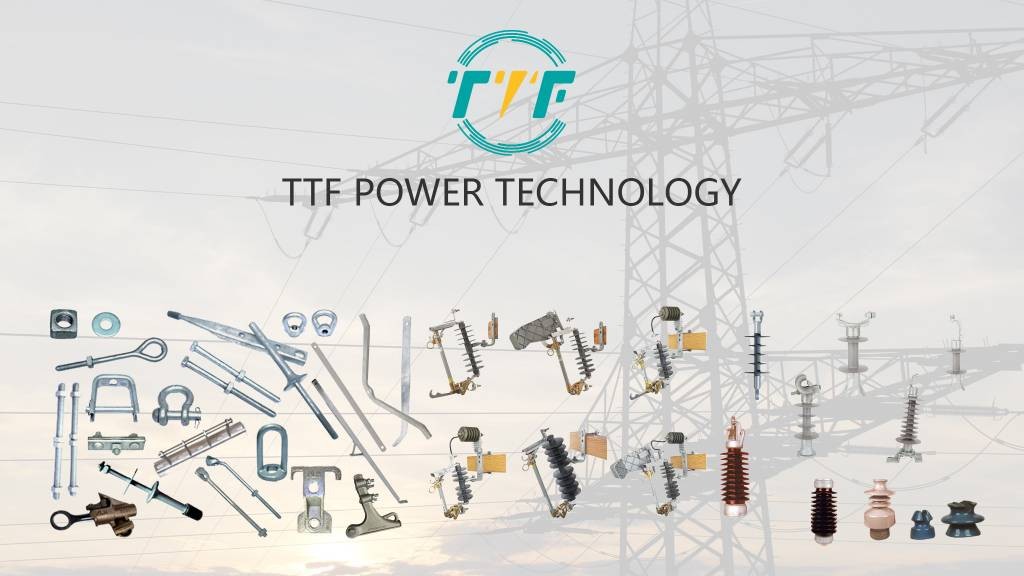
High-quality span clamps are heavy-duty, insulated support systems used to secure and organize electrical cables. The clamps are critical components in building a modern, robust electrical infrastructure needed to support SMR deployment. SMRs generate large amounts of power transmitted through high-voltage cables. E-span clamps prevent the cable from swaying, clashing, or sagging due to wind, ice, or seismic events. This is crucial to end short circuits, electrical faults, and cable damage. The clamps are also engineered to withstand vibrations and ground movement during the construction of the SMR facility. The clamps help anchor critical power and control cables to ensure safety systems remain operational during movements. E-span clamps secure cable trays to structures, walls, and ceilings. This keeps the complex wiring organized, accessible for maintenance, and protected from physical damage.
Benefits of the E-span clamps on the SMR project development in Argentina
E-span clamps handle drop wires, protect telecoms, and speed construction in the CAREM SMR site cabling. The clamps ensure that new or upgraded grid connections are modern, resilient, and capable of handling the base-load power from the SMR. This is because most SMR projects are in remote areas with weaker grids to handle mining and other operations. Here are the roles of the E-span clamps in the CADEM SMR development infrastructure in Argentina.

- Temporary construction communication and power feeds—construction crews depend on mid-span aerial drop points for temporary fiber, network, or lighting circuits. E-span clamps offer safe, quick take-offs along messenger strands without the use of extra poles or fixtures.
- Permanent low-voltage and fiber routing for instrumentation security—E-span clamps provide neat, tension-relieved take-offs for drop cables into control enclosures. The plant’s auxiliary systems use messenger-supported aerial runs over short distances.
- Overhead plant yard line management—drop-off points at a nuclear site must avoid obstacles to provide electricity to equipment yards, temporary storage lots, and perimeter fencing.
- Supporting remote-monitoring and safety systems—drop-wire attachments help ensure continuous connections for distributed sensors, security alarms, and environmental monitoring feeding into the plant.
- Fire protection—most E-span clamps are from materials that are fire-resistant. They help prevent the spread of flames along cable trays. This is a crucial consideration in nuclear safety.
Technological innovations supporting the CADEM SMR development in Argentina
SMR development in Argentina uses various innovations and infrastructure for site and grid safety. The country uses proven reactor design expertise, fuel-cycle capability, local manufacturing, and existing nuclear sites for SMR development. This development includes plans for operator training facilities and simulators next to the site, promoting knowledge transfer and workforce development. These innovations include
- Core reactor technology—these technologies include an integrated PWR system, natural-circulation cooling, and passive safety features.
- Instrumentation, control, and digital systems—CAREM uses digital instrumentation and control with human-machine interface and operator training simulators to confirm operations. It also includes extensive sensor networks for neutron flux, temperatures, pressures, containment parameters, and environmental monitoring.
- Fuel cycle and back-end infrastructure—Argentina’s uranium resources and industrial base support fuel manufacturing and future export chains.
- Construction, manufacturing, and industrial ecosystem—SMRs in the country aim to increase off-site modular fabrication. Modular manufacturing and existing site infrastructure reduce construction time and cost when deploying FOAK SMRs.
- Digital systems, instrumentation, and control—SMR deployment needs advanced control systems, cyber-secure digital instrumentation, and model-based validation to support factory acceptance testing and remote diagnostics.