
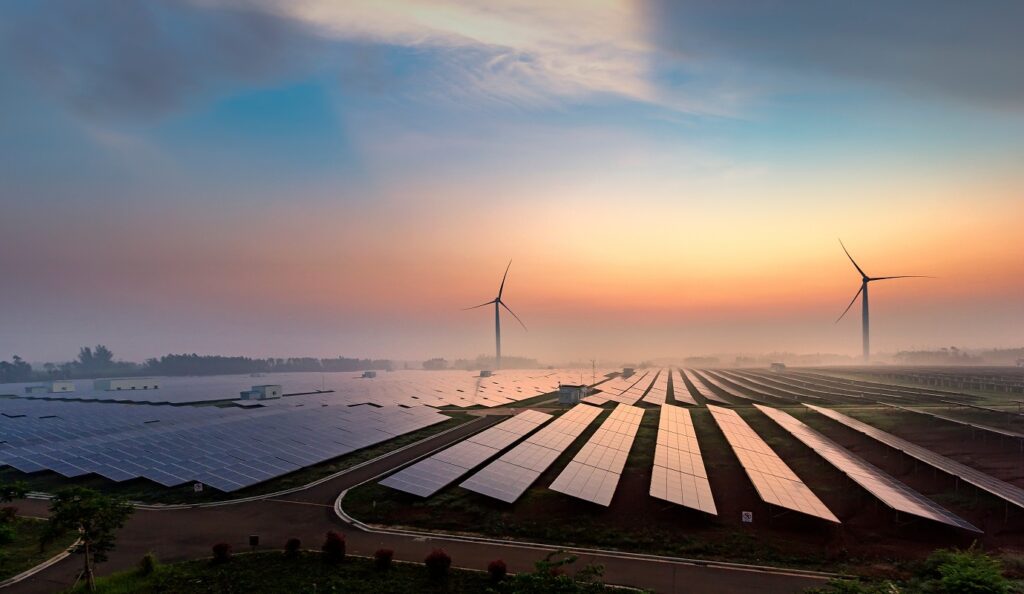
Actis has finalized the sale of Orygen, a power generation platform located in Peru, to Grupo Romero via an energy and infrastructure investment platform. Orygen is Peru’s second-biggest power generation platform, boasting 2.3 MW of installed capacity. This energy comprises 28% from wind and solar, 34% from hydropower, and 38% from thermal gas resources. Peru’s energy framework is designed to ensure reliability, stability of the grid, and the incorporation of renewable sources. The nation’s renewable energy infrastructure comprises large-scale solar PV systems, wind energy facilities, hydropower systems, transmission and distribution networks, as well as integration and system collaboration. This method allows for scalability, resilience, and effective energy distribution throughout Peru’s terrain. Power line hardware elements like crossover clamps ensure mechanical stability, electrical efficiency, and safety of the grid. Straight-line deadends secure and stress conductors on aerial transmission lines
Straight line deadends provide the mechanical stability and electrical safety to connect new renewable energy projects. The deadends secure the conductor at full strain and prevent movement to maintain integrity. They help terminate transmission lines at wind and solar farms and anchor them to substations. Straight line deadends hold the conductor taut to ensure proper ground clearance and prevent sagging. This ensures stability in Peru’s mountainous Andes and coastal regions facing wind and seismic activity. The dead ends also transfer the conductor’s mechanical load to the support structure. They absorb high directional pull at angle and terminal towers. This is crucial for long-distance lines from remote renewable sites.
Quality assurance for straight-line deadends used in renewable energy infrastructure
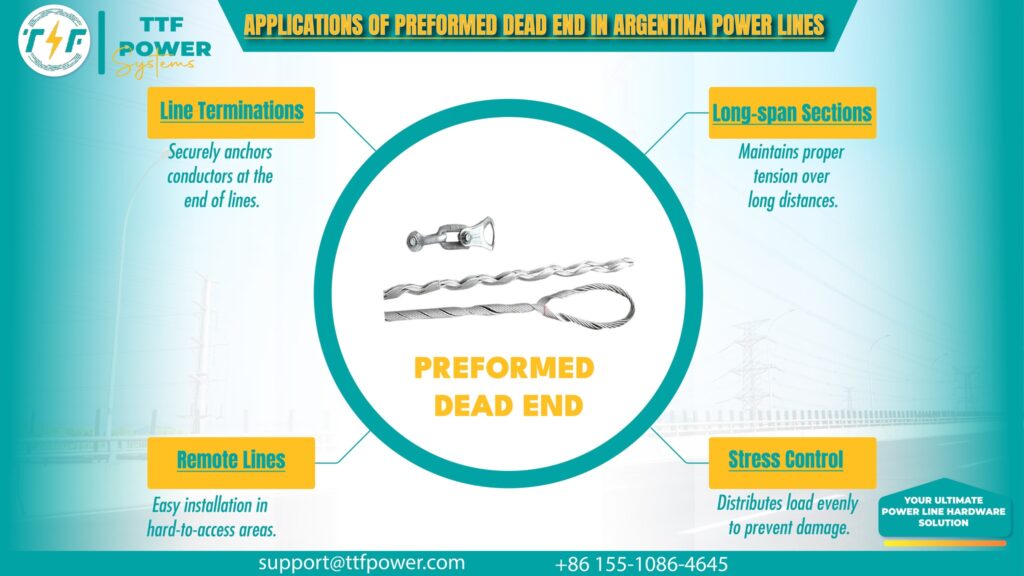
Quality assurance for straight-line dead ends ensures mechanical integrity, electrical reliability, and durability. The dead ends maintain conductor positioning, resist mechanical loads, and prevent slippage or damage. It is hence crucial to maintain quality assurance for diverse environmental conditions in Peru. Failure of the dead ends leads to line outages, structural collapse, and energy losses. The quality assurance process includes material verification, load testing, dimensional accuracy, corrosion resistance, and electrical performance validation. Straight line dead ends undergo tests such as chemical composition analysis, ultimate tensile strength tests, and aging tests. Quality assurance helps the dead ends withstand climate variability and rapid renewable expansion. Robust quality assurance for straight-line dead ends offers grid reliability, structural stability, and long-term performance.
Functions of the straight line dead-end in Peru’s renewable energy infrastructure
Straight line deadends offer mechanical and structural reliability in transmission and distribution networks. They help connect solar, wind, and hydroelectric generation sites to the grid. Straight-line dead ends are integral to system stability, load management, and operational reliability. Here are the functions of the straight-line dead ends in Peru’s renewable energy infrastructure.
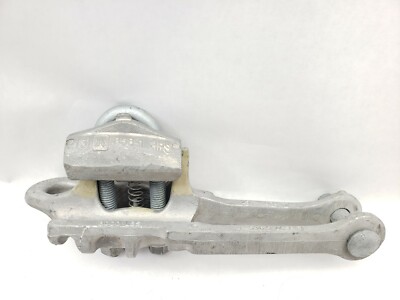
- Conductor termination and tension management—straight-line dead ends secure and terminate conductors. They maintain constant conductor tension and prevent conductor slippage under mechanical stress.
- Structural load distribution—straight-line dead ends distribute mechanical loads from conductors to support structures. They help balance longitudinal tension forces and prevent structural deformation.
- Grid interconnection of renewable energy sources—the dead ends allow connection of solar farms and wind plants. They serve as transition points between different conductor segments.
- Mechanical stability under environmental stress—the deadends maintain conductor grip during thermal expansion and contraction. They absorb dynamic loads from wind-induced vibrations.
- Protection of conductors—straight-line deadends provide uniform clamping pressure and prevent conductor strand breakage. The dead ends reduce surface damage that could lead to corona discharge.
- System reliability and safety—straight-line dead ends reduce the risk of line failure and outages. They enhance safety for maintenance personnel.
Effects of investments in renewable energy infrastructure in Peru
Investments in renewable energy infrastructure generate impacts at the system level throughout the power sector, economy, and environment. They affect grid efficiency, pricing frameworks, and future energy reliability. Investments in renewable energy facilities impact:
- Diversifying the energy mix and enhancing security—investments in solar, wind, and hydropower lessen reliance on a single-source generation.
- Lowered production expenses—large-scale renewable energy sources have minimal marginal costs, leading to decreased wholesale electricity prices.
- Upgrading and expanding the grid—renewable initiatives need extra transmission lines, substations, and intelligent grid systems. Modernization enhances voltage stability, increases dispatch flexibility, and facilitates the incorporation of distributed generation.
- Regional expansion and infrastructure enhancement—renewable initiatives result in better local infrastructure, higher electrification rates, and increased economic activity in both construction and operational stages.
- Attracting investments and fostering market confidence—large-scale project investments enhance capital inflows and ease infrastructure funding.