

Solar DQD, and Argentine solar developer and engineering procurement and construction specialist announced a goal of securing 400 MW of owned solar capacity by end of 2026. The country has positioned itself as Argentina’s leading utility-scale solar EPC contractors with more than 1.2 GWp of solar projects. Recently, the company has executed Argentina’s largest solar park El Quemado, developed by YPF Luz. The project is currently under construction with 100 MW already for commercial operation. The construction involved the installation of more than 550,000 photovoltaic modules and 40 transformation centers in the Mendoza. After completion, the plant will reach a total installed capacity of 360 MW. Additionally, the Pampa del Infierno solar plant with 150 MWp, connected the plant to the grid after installing more than 220,000 solar panels. The infrastructure supporting solar development demands the use of the Y-clevis eye. Their use ensures the safety, reliability, and efficiency.
The eye clevis acts as a pivotal connection point within the racking system. It is used to connect the horizontal aluminum rails to vertical steel posts. The Y shape and use of bolts provides a zone for vertical adjustment. This helps level the entire array on uneven terrain. It is designed to transfer mechanical loads including the weight of the panels, wind uplift, and shear loads. The metal-to-metal contact between the galvanized steel Y-clevis and the steel post creates a low-resistance path.
The Y-clevis eye helps hang and support heavy cable trays or conduit runs that carry the DC and AC wiring from the arrays to the inverters and combiner boxes. They can be used as sturdy brackets to mount ancillary equipment like weather station, sensors, or communication devices onto posts. The Y-clevis eye offers superior materials, easy design, versatility, and cost effectiveness.
Y-clevis eye in solar photovoltaic installations in Argentina
The Y-clevis eye is a mechanical hardware component with an integrated eye or loop. It acts as a connection point for rigging, lifting, anchoring, alignment, and tensioning of structural elements during construction. It helps support safe and precise assembly of mounting structures, trackers, and other heavy components. The growth of solar energy in Argentina depends on the clevises to ensure the innovations used function reliably. Here are the functions of the Y-clevis eye in solar PV installations.

- Lifting and rigging heavy components – the construction of utility-scale PV plants, racking systems, tracker foundations, purlins, and panels need Y-clevis eye for positioning. The clevis provides a secure attachment point for cranes, hoists, slings, and temporary rigging lines.
- Aligning and tensioning of structural members – the Y-clevis eye serves as an adjustable linkage point for tensioning cables, braces, or turnbuckles during structural alignment. Its alignment ensures correct panel tile and orientation, optimal tracker motion, and uniform load distribution.
- Load transfer and structural support – the Y-clevis eye functions as a load-bearing link between support beams, cross-members, anchors, and tension rods. Its design distributes loads efficiently into the structural frame and reduce the risk of fatigue and deformation.
- Assembly and disassembly – utility-scale farms depend on modular and repeatable hardware to streamline construction. Using the Y-clevis eye allows easy installation with standard fasteners and offer compatibility and reusability.
Solar innovations supporting Argentina’s growth
Argentina’s solar sector is experiencing growth driven by expanded project rollouts. The growth is also arising from technological, commercial and systemic innovations. These improve performance, reduce costs, and enable broader adoption. Using the Y-clevis links solar innovation and execution to enable precision, flexibility, and safety across the modern PV installations. The advancements fuel utility-scale installations and distributed generation by positioning Argentina as a rising solar market. These innovations include:
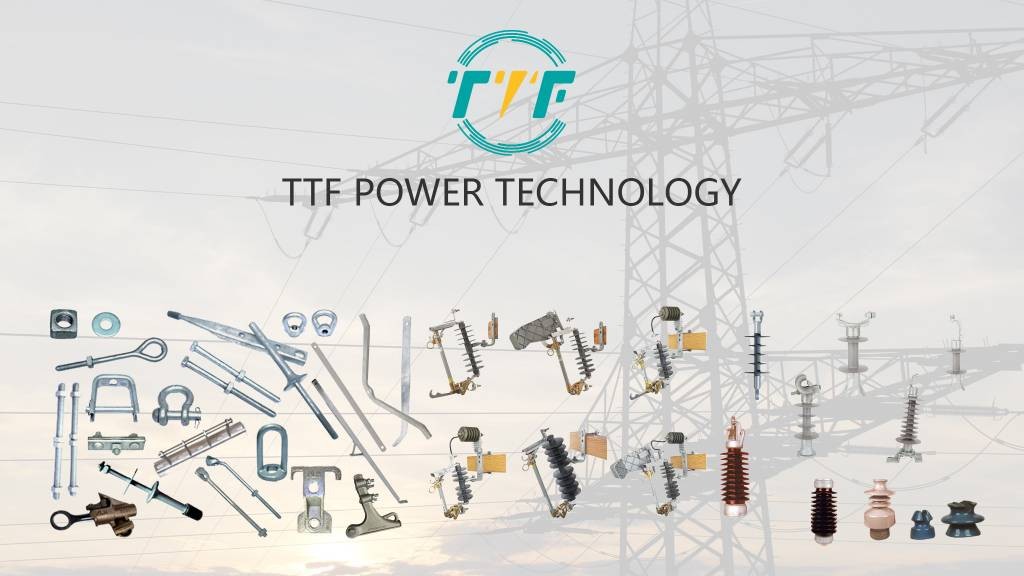
- Advanced PV technologies – solar DQD uses high-performance photovoltaic modules and advanced system components. These include use of bifacial solar modules and high efficiency inverter and tracking systems.
- Intelligent energy management and storage integration – energy storage systems and smart energy management solutions help solar installations deliver more consistent power. This includes AI-driven storage optimization and hybrid solar and storage projects.
- Advanced mounting – engineering improvements in mounting hardware and structural components contribute to faster deployment. Such innovations reduce balance-of-system costs to keep solar pricing competitive.
- Supporting hybrid and storage infrastructure – solar plus storage and hybrid energy systems need support from the Y-clevis eye. The clevis secures auxiliary frames, cable supports, and anchoring systems. It also helps integrate extra structural elements without redesigning primary supports.