
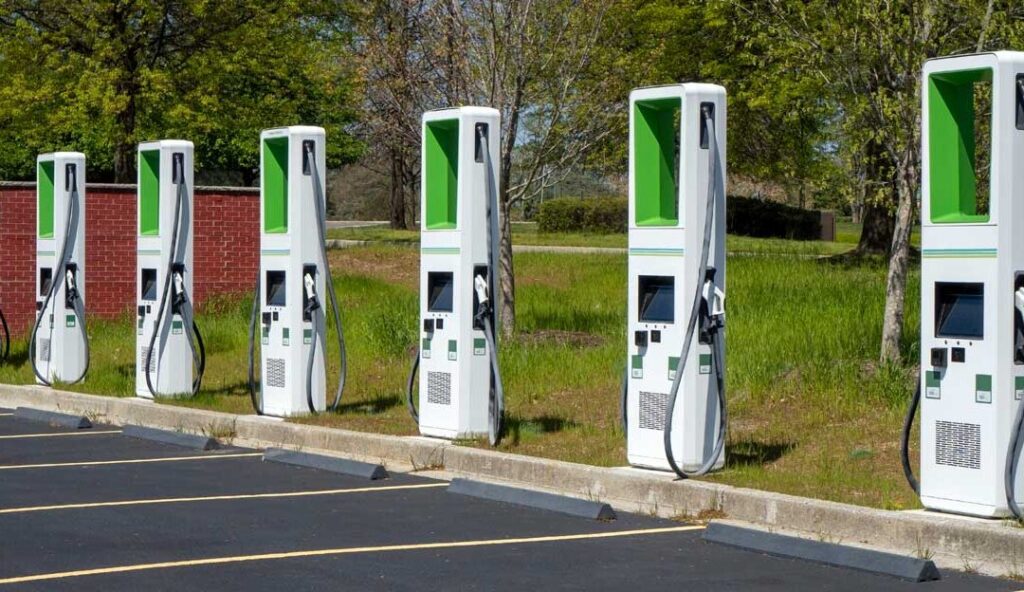
Electric mobility in Colombia is undergoing transformation, driven by the arrival of new models and sustained sales growth. Investment from Asian and domestic brands establishes the nation as a frontrunner in embracing clean technologies and sustainable transportation. Government incentives, heightened environmental consciousness, and the growth of charging infrastructure contributed to the rise of electric mobility. Colombia has implemented several measures to encourage growth, such as tax breaks, reduced tariffs, traffic incentives, and a national development strategy. BYD, Renault, and Chevrolet lead the market, offering both budget-friendly and premium vehicles. Electric buses are growing in number, with more than 1,500 in use. The growth of charging networks on highways and in small towns will result in greater acceptance of the technology. Pole bands assist in organizing and securing electrical connections for charging stations.
The pole band helps secure and organize charging cables to prevent tangling and damage. It is able to hold EV chargers, meters, or communication devices when charging points mount on utility poles. EV charging stations integrate with pole-mounted transformers. Pole bands help stabilize these electrical installations. They ensure secure connections between the power grid and charging points to reduce electrical faults. High-quality pole bands are critical components in EV’s charging ecosystem to ensure safety, organization, and efficiency. They help reduce the need for ground-level infrastructure for cities with limited space.
Pole bands in electric vehicles and charging infrastructure
Pole bands are crucial for structural and safety of electric vehicle and charging networks. High-performance pole bands are metallic straps or clamps used to fasten hardware and equipment to utility poles. They are crucial in mounting charging units, support brackets, electrical fittings, and communication gear. Colombia has aggressive push toward EV adoption. This includes expanding its charging grid beyond cities and rural areas. Pole bands provide a cost-effective, quick to install solutions to full-scale ground station builds. They are helpful in public transport electrification, low-income areas, and remote charging hubs. Here are the functions of pole bands in EV and charging infrastructure.

- Mounting charging equipment – pole bands enable the installation of EV chargers in areas where ground-mounted setups are impractical.
- Securing power line accessories – transformers, conductors, fuse cutouts, and arresters mount on utility poles. Pole bands anchor these accessories to ensure safety and stability.
- Supporting communication networks – pole bands fasten components of data and communication infrastructure. These components enable smart charging and grid monitoring systems for EV load balancing and predictive maintenance.
- Ensuring safety and structural integrity – pole bands distribute weight and avoid drilling or damaging the pole. By doing so, they reduce long-term maintenance and extend the lifespan of both the pole and mounted components.
Technologies driving the surge of EVs and charging infrastructure in Colombia
Colombia’s shift to electric vehicles is rapidly advancing, featuring EV models alongside public-private investments in nationwide charging infrastructure. These technologies could encompass smart grids, charging solutions, renewables, solar-integrated chargers, next-gen batteries, and advanced fleet management tools. National initiatives are underway to standardize regulations and enhance infrastructure. Pole bands aid in the implementation and advancement of these technologies in Colombia. Below are the technologies driving Colombia’s EV and charging network.
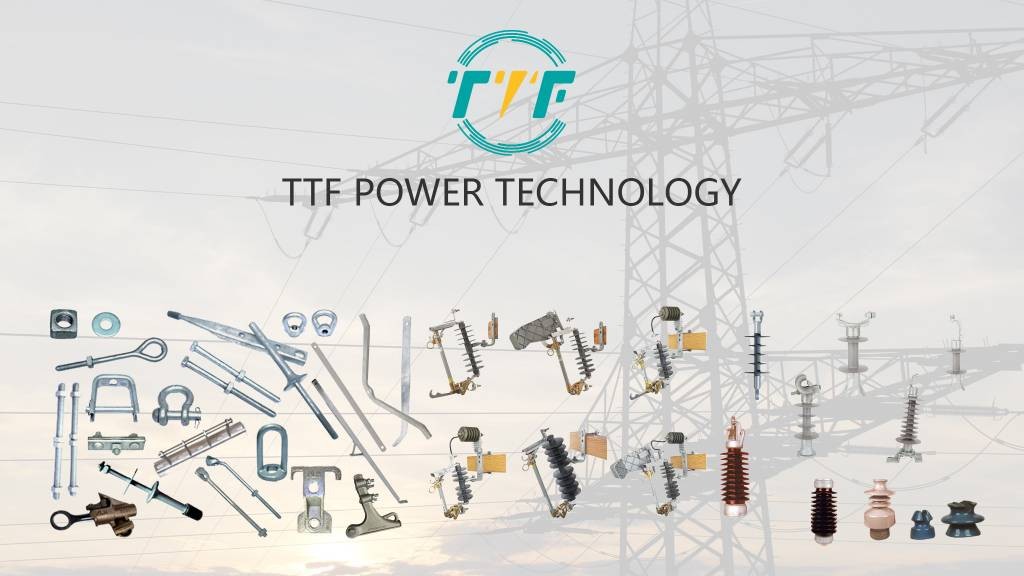
- Battery technologies encompass lithium-ion batteries, lithium iron phosphate (LFP), and battery management systems (BMS). The energy source for many EVs offers extended cycle longevity, reduced expenses, and manages battery performance and health. LFP batteries are preferred for their reliability in public fleets to aid the movement toward electrifying mass transit.
- Technologies for charging infrastructure – types of charging encompass level 2 chargers, DC fast chargers, intelligent charging systems, and wireless charging. They can be found in shopping centers, residential buildings, on roadsides, and urban vehicle collections.
- Grid and energy management – these systems comprise smart grids, Vehicle-to-Grid, and artificial intelligence for load forecasting. These assist in tracking and managing electricity flow, two-way power flow from EVs, and forecasting energy demand from EVs.
- Integration of renewable energy – this encompasses the incorporation of solar PV, wind power, and battery energy storage systems with electric vehicles. It assists in energizing EV charging stations, supports grid charging, and retains energy for overnight charging. This is essential for decreasing dependence on fossil fuels.
- Heavy transport and fleet innovations – the technology encompasses electric bus platforms, regenerative braking systems, and modular charging solutions. They operate in urban public transportation, harnesses braking energy, and allows scalable fleet charging