
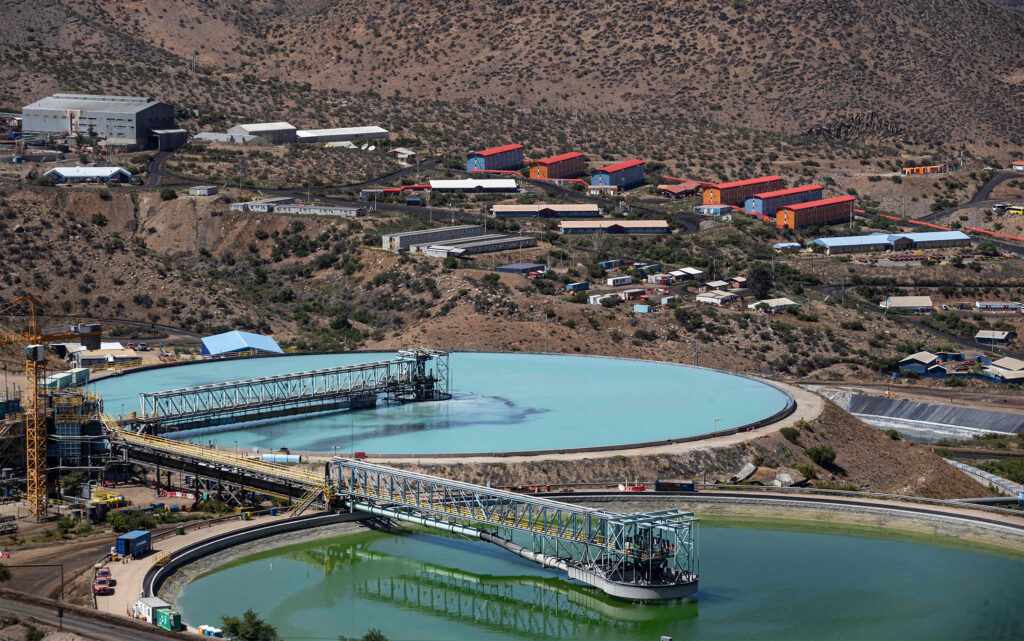
As demand for green innovations increases, there is increasing demand for metals such as copper and lithium. Major global institutions have significantly raised their copper price forecasts for 2025-2026 to record levels. Chile’s state copper commission, Cochilco, issued its highest-ever average price predictions. Chile copper production is facing challenges like mine operational disruptions, weak performance, and lower production from Anglo American Sur. These disruptions prompted analysis to reverse their 2025 market expectations from a surplus of 40,000 metric tons to a deficit of 124,000 metric tons. Copper is a crucial component in power grids, electric vehicles, and renewable energy generation. It functions in transmission lines, transformers, substations, inverters, and grid-stabilizing technologies. Using strain clamps in copper production anchors and supports electrical conductors at termination and suspension points.
High-quality clamps provide reliability to electrical infrastructure used for copper mining and production for renewable energy and electric vehicles. Strain clamps withstand the mechanical tension of the conductor. It also provides a reliable, low-resistance electrical path from the conductor to the supporting structure. Strain clamps are from durable, corrosion-resistant materials like aluminum alloy or forged aluminum. The design features a gripping mechanism that holds the conductor without damaging it.
Large-scale copper mining and processing demands the use of high-voltage transmission lines crossing the mining regions in Chile. These lines depend on strain clamps to maintain operations and functionality. Strain clamps ensure the mechanical integrity of the power lines for reducing downtime and ensuring a reliable power supply for copper extraction and processing. By enabling reliable power delivery to copper mines, strain clamps speed up Chile’s renewable energy transition and economic future.
Role of copper in energy transition and supply in Chile
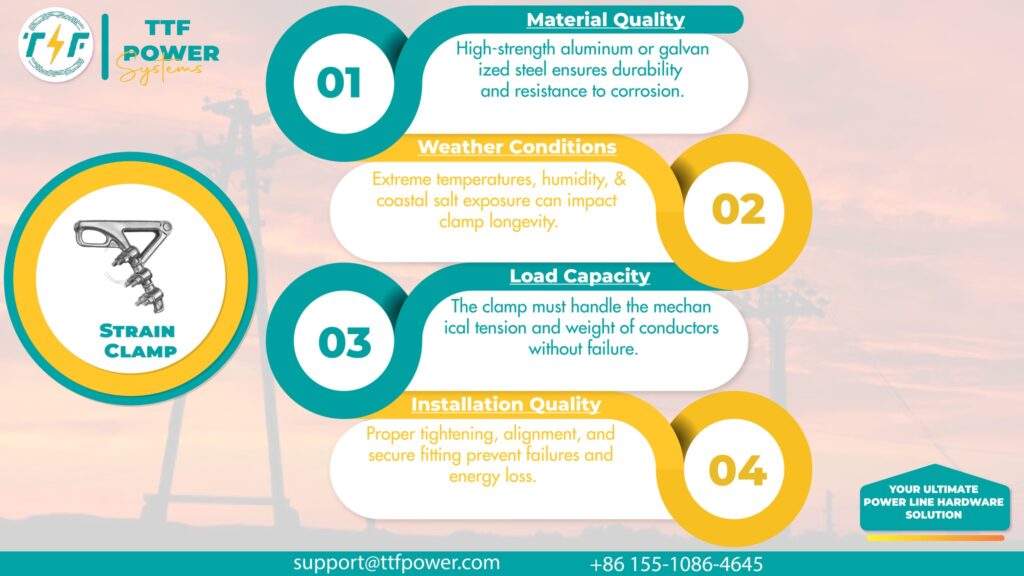
Copper shapes the internal power evolution and clean energy supply in Chile’s energy transition. Chile’s copper sector is vital for renewable expansion, grid modernization, electrified transport, and hydrogen innovations. Chile’s wind and solar resources depend on copper-rich technologies. Copper is crucial for photovoltaic wiring, inverter systems, wind turbine generators, and transmission lines. Integrating these intermittent renewable resources into the grid relies on copper-intensive hardware. These include high-voltage transformers and substations, switchgear, protection systems, and busbars. Strain clamps secure and anchoring equipment supporting the development of these technologies. Hence, copper plays a crucial role in strengthening the grid’s flexibility and reliability. Additionally, with increased renewable energy, there is demand for battery storage systems to stabilize the grid. Copper functions in power conversion systems, battery interconnects and cabling, and high-capacity charging. There are also other innovations integrating renewable power and electrified equipment into copper mining to reduce carbon emissions.
Strain clamps in Chile’s copper mining for energy transition
Strain clamps are essential for Chile’s copper mining operations as the energy sector modernizes its power infrastructure. Modernized infrastructure supports the global energy transition. Strain clamps ensure the reliability, safety, and efficiency of electrical transmission systems powering copper mines, processing plants, and desalination facilities. Here are the functions of the strain clamps in copper mining in Chile.
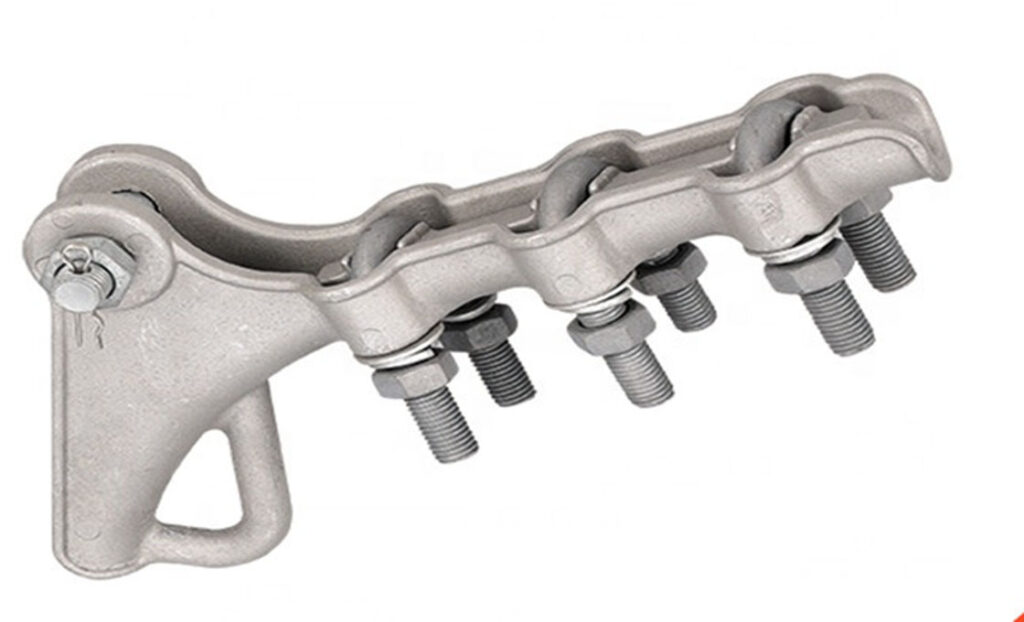
- Secure mechanical anchoring for high-tension conductors—copper mining operations depend on extensive high-voltage transmission networks. Strain clamps provide the mechanical anchoring that holds conductors under high tension.
- Ensuring electrical continuity in power distribution systems—strain clamps ensure low-resistance electrical contact between the conductor and the clamp body.
- Stabilizing renewable-powered mining operations—strain clamps stabilize overhead power and interconnection lines. They ensure secure transmission of intermittent renewable power to mining operations.
- Strengthening power infrastructure—the clamps ensure the mechanical integrity of transmission lines supplying desalination pumps, secure anchoring, and stable energy delivery.
Challenges facing Chile’s copper industry
Chile’s copper industry faces issues that pose risks to production stability. These challenges arise from structural, environmental, and operational factors. This may threaten copper supply for EVs, power grids, and renewable energy. The key challenges include:
- Increasing energy demand and grid constraints—copper mining and processing are energy-intensive. Key challenges include higher electricity prices, grid congestion, intermittency from solar and wind. These causes the need for more transmission to integrate clean energy.
- Project delays—there are strict environmental regulations and slow permitting processes that slow the development of new projects, expansion, and desalination facilities.
- Infrastructure challenges—large new projects depend on high-voltage transmission capacity supported by strain clamps.
- Competition from emerging producers—other countries such as Peru, the DRC, and Zambia are expanding copper production. The lower operating costs and new high-grade discoveries put pressure on Chile’s competitiveness.