
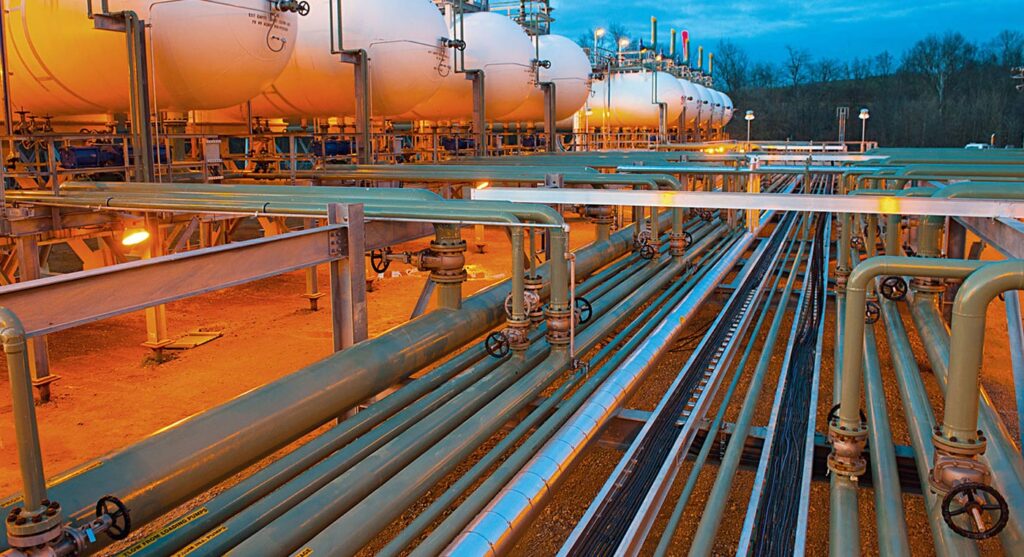
The Ministry of Energy and Mines (MINEM) implemented a set of measures to prioritize the supply of natural gas to households, public transportation, and activities in Peru. Peru’s gas infrastructure is dependent on key transmission pipelines that transport natural gas from production fields to consumption centers. The deflagration can result in localized pipeline integrity damage, pressure instability across interconnected segments, and reduced throughput capacity. Lack of transmission networks may cause disruptions at critical nodes that create system-wide ripple effects. Natural gas transmission disruptions may force generation units to operate at reduced load, switch to backup liquid fuels, and exit dispatch temporarily. Peru’s natural gas sector should prioritize development of extra transmission loops to reduce single-corridor dependency, expansion of LNG imports, and investment in strategic gas storage. These advancements depend on robust hardware such as helical anchors.
Helical anchors prevent natural gas pipelines from floating to the surface in areas with high water tables. They secure pipelines by resisting uplift forces to maintain the pipe’s designated position and prevent vertical displacement. The anchors transfer the pipeline’s buoyant load through weak surface soils to deeper soil layers. Helical anchors replace traditional concrete weights in natural gas production facilities. They also reduce transportation costs and construction equipment requirements in remote areas. Helical anchors are installed by rotating the shaft, which advances the helix into the soil. The anchors serve in tension applications like pipeline buoyancy control and transmission tower guy lines.
Quality assurance for helical anchors used in natural gas pipelines and infrastructure
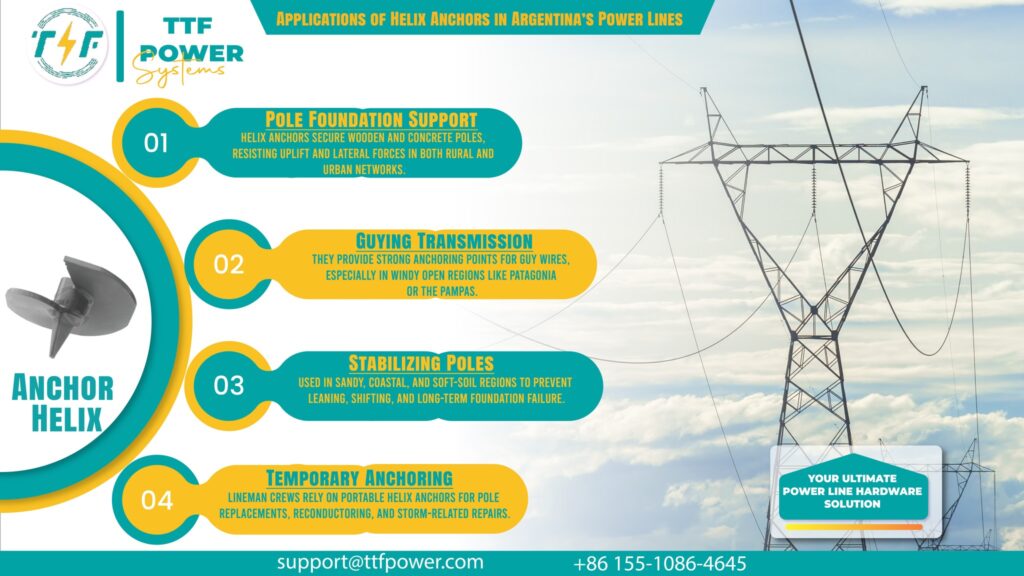
Quality assurance for helical anchors ensures foundation stability, structural integrity, and long-term performance under operational loads and environmental conditions. Helical anchors support above-ground installations, valve stations, compressor foundations, and structures where traditional deep foundations may be impractical. Compliance with Peruvian technical standards helps meet performance and safety requirements. Quality assurance begins with verifying that the foundation design matches subsurface soil conditions. Design review ensures safety, proper selection of helix size, spacing, and installation depth, and compatibility with site loads. The process includes pre-installation verification, field monitoring, inspection hold points, load testing, and verification. Ensuring quality assurance for the helical anchors guarantees foundation reliability and structural safety. They also reduce the risk of operational failures and maintenance costs.
Key roles of helical anchors in natural gas infrastructure in Peru
Helical anchors offer geotechnical and structural benefits in Peru’s natural gas pipeline network. The anchors provide controlled load transfer and ground stabilization. Helical anchors secure transmission assets, maintain structural alignment, and enhance system resilience in diverse regions. Here are the roles of the helical anchors in natural gas infrastructure.
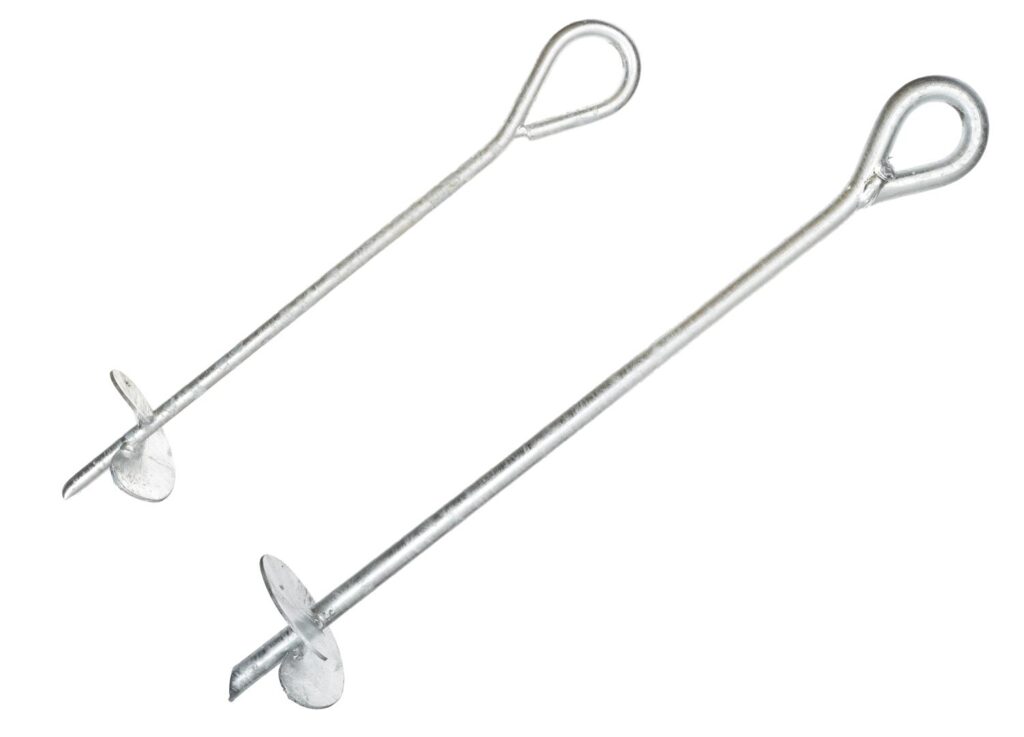
- Structural stability—helical anchors resist axial and tension by transferring uplift loads through their helical plates into soil strata. This prevents vertical displacement of pipe supports, valve stations, and metering facilities.
- Support for aboveground pipeline components—the infrastructure includes valve stations, compressor station equipment, metering and regulation units, and pipeline supports. The anchors provide deep foundation support for structural frames and equipment skids.
- Lateral load resistance—helical anchors resist lateral movement through shaft bending resistance and soil-structure interaction along the embedded length. They help maintain horizontal alignment and prevent structural racking.
- Corrosion-controlled foundation systems—helical anchors are hot-dip galvanized and epoxy-coated. They are also designed with sacrificial thickness for corrosion allowance. This helps provide durable foundation support compatible with cathodic protection strategies.
Infrastructure supporting Peru’s natural gas sector
Peru’s natural gas sector depends on integrated value chain spanning upstream production, high-pressure transmission, processing, LNG export infrastructure, and downstream distribution. These include:
- Upstream production infrastructure—these include gas extraction wells, gathering systems, field separation, and flowlines connecting wells to processing plants.
- Gas processing plants—raw natural gas undergoes separation of condensates, removal of impurities, and compression for transmission. These ensure gas quality meets transmission and end-user specifications.
- High–pressure transmission pipelines—the pipelines traverse complex terrain, which requires advanced integrity management. They connect remote production sites to Peru’s primary consumption centers and export terminals.
- LNG infrastructure—these include liquefaction plants, cryogenic storage tanks, marine loading terminals, and pipeline interconnections to the transmission system. This infrastructure allows Peru to export surplus natural gas to international markets. This is while supporting domestic supply balancing.