
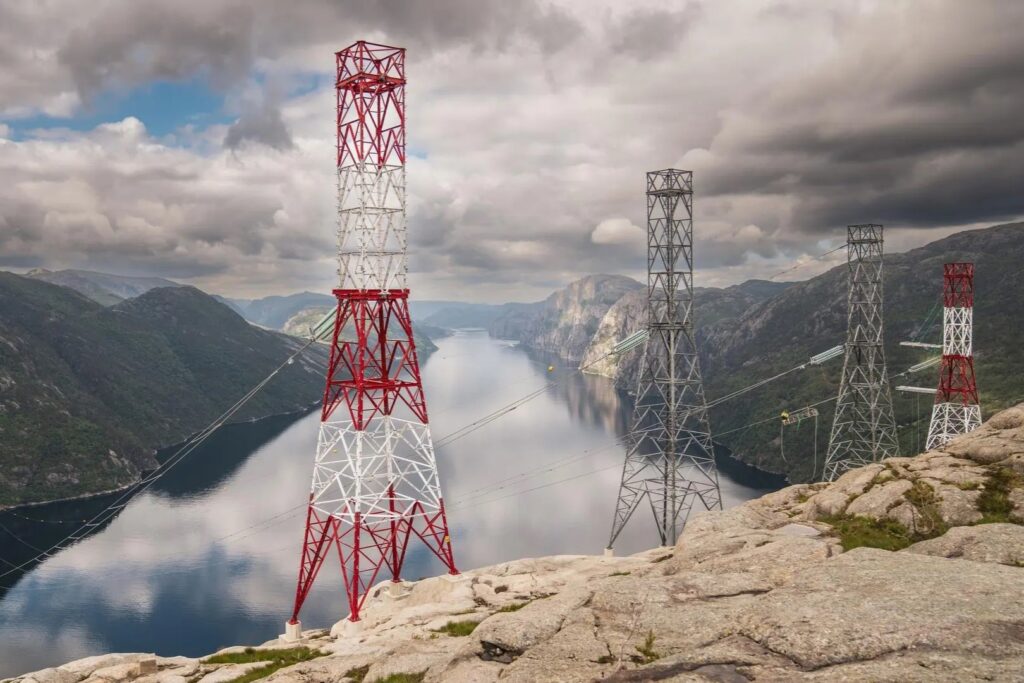
The Terna Group companies recently signed an agreement with Engie Transmission Peru for the sale of the share capital of a 138 kV power line with a total of 132 km. The transmission line will connect the Aguaytia and Pucallpa substations in the Ucayali region of Peru. This development will use $15 million, with completion expected in 2026, pending regulatory and contractual conditions. The power line will deliver electricity from generation sources to demand centers in Pucallpa. It will provide voltage support and system reliability in remote parts of the grid. Additionally, it will support power demand from agro-processing and oil and gas operations in the Ucayali basin. The development will also improve energy dispatch coordination, strengthen grid access for generation assets, and support renewable energy integration. These developments will demand the use of high-quality clevis brackets.
Secondary clevis links insulator strings to transmission towers and conductors. It provides mechanical strength and flexibility to ensure grid stability. The clevis ensures that insulators can bear the combined mechanical and electrical loads in high-tension environments. The ball design of the clevis allows for rotational and angular movement. This movement helps reduce strain on conductors and insulators by accommodating smooth line movement. By doing so, the clevis prevents stress concentrations, cracking, or snapping in Peru’s diverse environmental conditions. The clevis bracket delivers clean electricity from renewable sources like solar and wind farms to remote operations. They help ensure reliable power delivery through high-voltage lines crossing difficult terrain. The design of the clevis allows for faster and safer installation of new transmission lines.
Quality assurance for the clevis bracket used in power line expansion in Peru
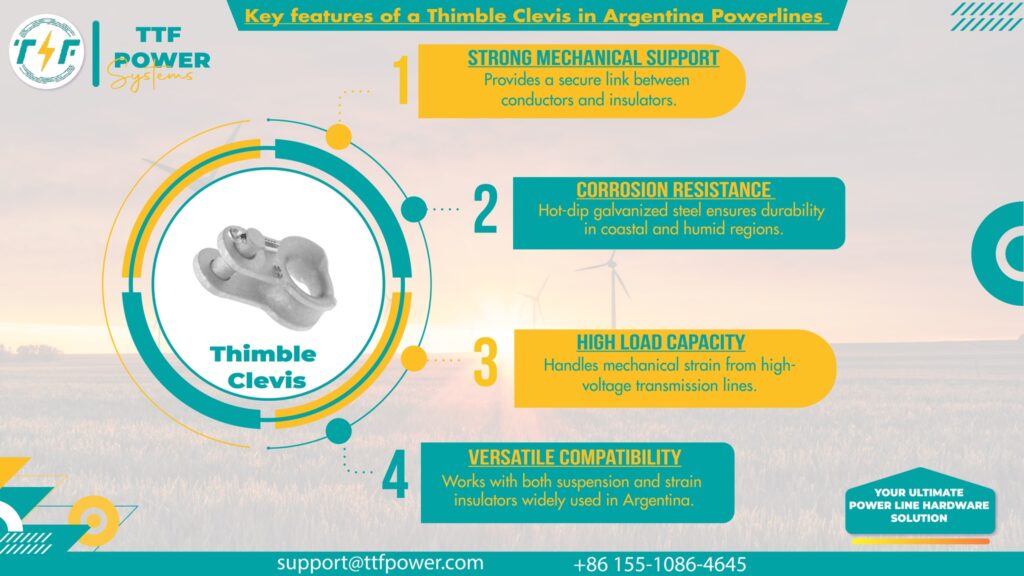
Quality assurance for clevis brackets ensures mechanical reliability, electrical safety, and long-term performance in transmission and distribution infrastructure. The clevis bracket serves as a structural connector that attaches insulator strings, crossarms, and suspension assemblies to transmission structures. Ensuring quality control for the brackets prevents structural failures and ensures compliance with international utility standards. Quality assurance focuses on verifying materials used to manufacture the clevis brackets. The materials should withstand high mechanical loads, environmental stress, and long service life. Quality checks include chemical composition testing, mechanical strength tests, and impact resistance tests to confirm performance under dynamic loading conditions. These tests ensure that the bracket can support conductor tension, insulator weight, and wind-induced loads. Clevis brackets should meet dimensional tolerances to ensure compatibility with other transmission hardware. These components include shackles, pins, and suspension clamps. Enhancing quality assurance for the brackets provides safe and durable support for power lines.
The roles of the clevis brackets in Peru’s power line expansion
High-quality clevis brackets enable the safe attachment and alignment of conductors and insulator assemblies to utility structures. The brackets maintain grid stability and mechanical integrity as transmission networks extend to new industrial zones. Here are the functions of the clevis bracket in power line expansion.
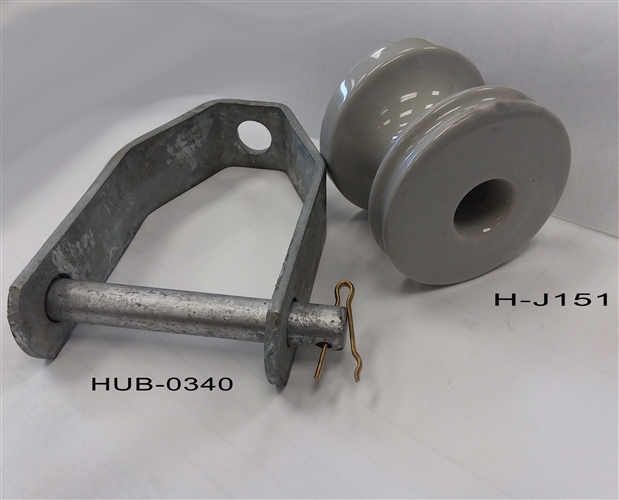
- Structural connection between line hardware components—the clevis bracket connects power line components on power lines. It provides the interface point that joins insulator strings, suspension fittings, and structural supports.
- Load distribution and mechanical stability—clevis brackets distribute loads across the supporting hardware. They help maintain safe operating conditions for high-voltage infrastructure.
- Support for insulator assemblies—clevis brackets support and secure insulator strings in suspension or tension configurations. They allow insulators to maintain correct vertical positioning, handle mechanical loads from the conductor, and provide electrical clearance between the conductor and towers.
- Flexible movement in transmission lines—transmission lines accommodate dynamic mechanical movement. This movement may be from wind, temperature changes, and conductor vibration. The clevis bracket consists of pin connections that allow rotational movement.
Technologies supporting Peru’s power line expansion
Power line expansion in Peru relies on advanced technologies designed to improve grid capacity, reliability, and operational efficiency. Modern transmission technologies enable Peru to extend its grid into remote regions. These technologies include:
- High-voltage transmission systems—these systems allow electricity transmission over long distances with minimal power loss.
- Smart grid monitoring technologies—smart grid systems include real-time transmission line monitoring, remote sensors, digital fault detection systems, and SCADA systems.
- Modern substation automation—these technologies include digital protection relays, automated switching systems, remote monitoring platforms, and intelligent transformers.
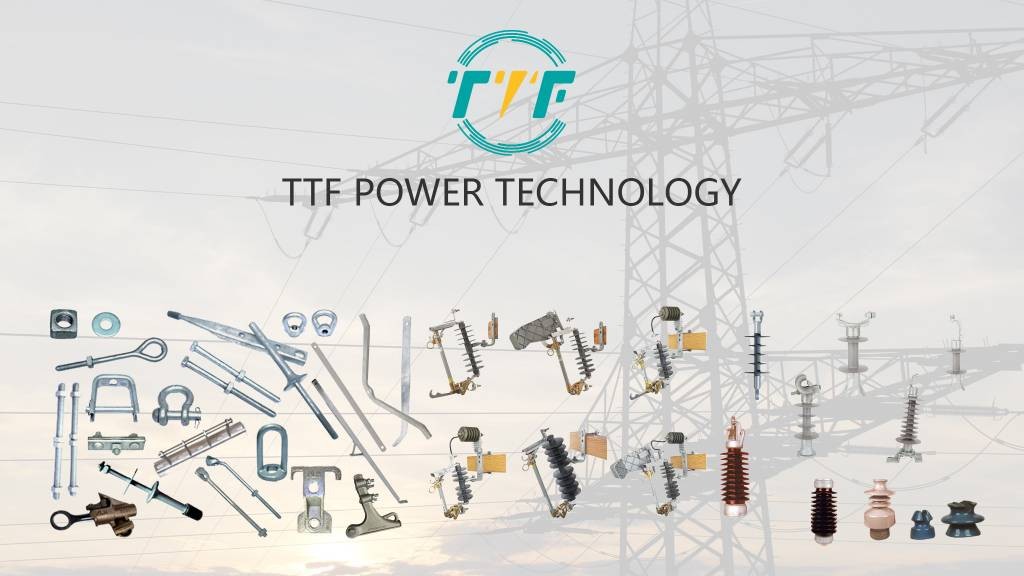
- High-performance transmission hardware—these include suspension and tension clamps, clevis brackets, connecting fittings, spacer dampers, and high-strength tower structures.