
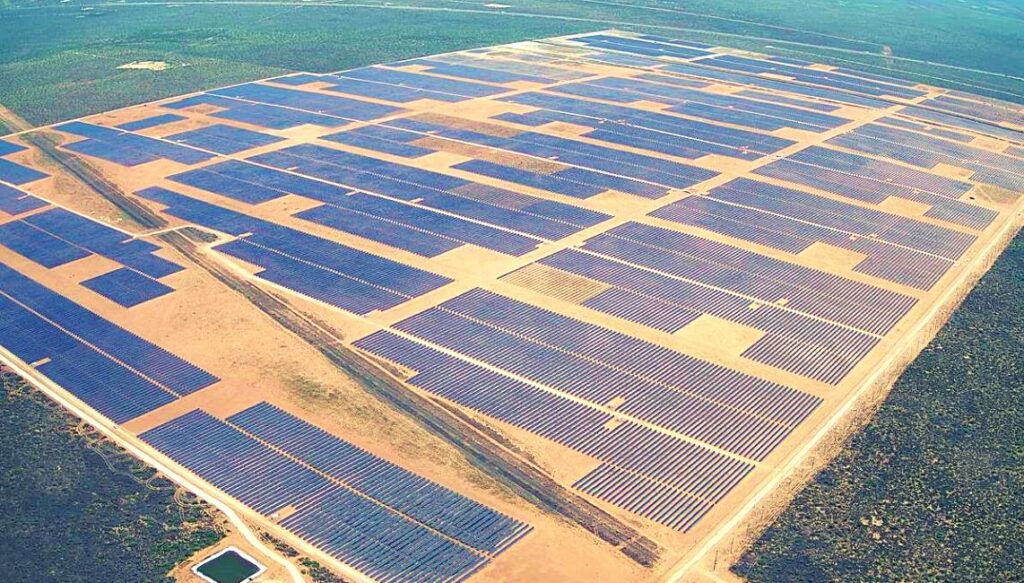
YPF Luz has launched the 305MW El Quemado solar plant in Argentina’s Mendoza province. It revealed a $220 million initiative that the provincial government claimed is currently the nation’s largest solar plant by installation capacity. The solar facility covers 620 hectares and incorporates over 511,000 bifacial photovoltaic panels from Jinko Solar, 5,800 Arctech solar trackers, along with 1,170 Huawei inverters and 40 transformer stations. Bifacial modules provide greater energy output by capturing light on the rear side, performing better in high-reflectivity settings, and boosting operational efficiency for large-scale utility projects. Moreover, solar trackers enhance the capture of solar irradiation, boost daily energy output, and reduce energy losses due to the constraints of fixed tilt angles. Performing quality assurance on these systems aids in lowering operational risks, decreasing downtime, and prolonging the life of the infrastructure. These systems depend on shackle insulators to anchor and support the solar panels.
Electrical insulators ensure that the power generated by solar panels is safely transmitted to the grid and storage facilities. The insulators isolate the live current-carrying conductor from the grounded support structure. This prevents current leakage and electrical flashovers to maintain system efficiency and safety. Solar farm cables and wires face mechanical stress from wind, temperature changes, ice loading, and weight. Shackle insulators withstand high vertical and horizontal tension. By holding the conductors in place, the insulators prevent sagging, swinging, or coming loose. The insulators secure and protect the conductors against environmental and mechanical loads.
Quality assurance for shackle insulators used in Argentina’s solar farms
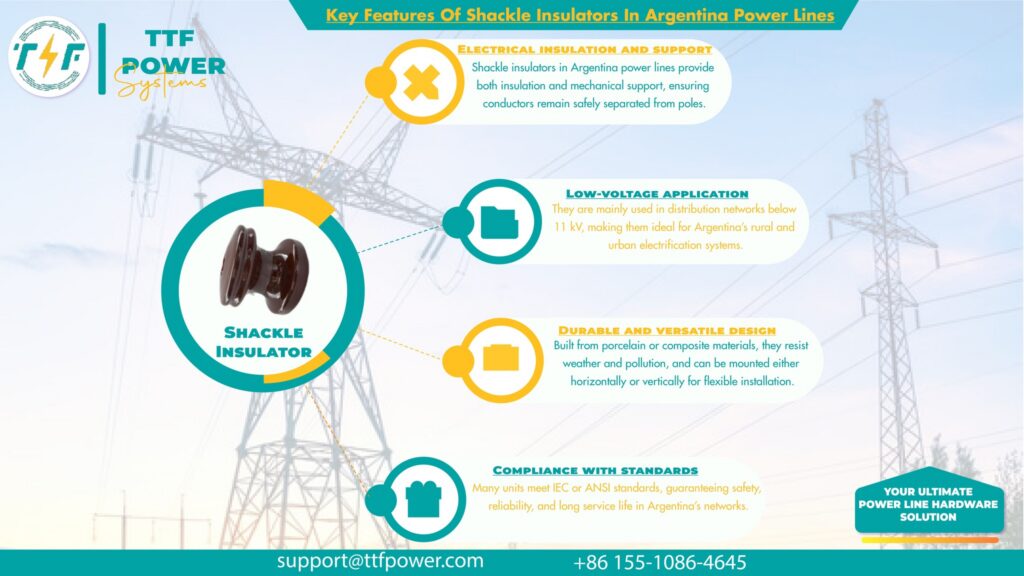
Shackle insulators support conductor insulation, mechanical anchoring, and low-voltage distribution reliability. The insulators face UV radiation, thermal cycling, dust contamination, wind loading, and moisture intrusion. Conducting quality assurance prevents failures that can trigger flashovers, leakage currents, conductor instability, and feeder interruptions that affect inverter performance and grid integration stability. QA programs ensure that the insulators maintain dielectric strength, mechanical integrity, and environmental resistance. The process includes material verification, dimensional and mechanical inspections, electrical performance testing, and aging resistance validation. Quality assurance reduces unexpected outages, maintenance costs, insulation failures, fire risks, replacement frequency, and grid instability. These processes ensure the insulators can support the demanding environmental and electrical conditions related to utility-scale solar infrastructure.
Functions of shackle insulators in Argentina’s solar farms
Shackle insulators support conductors while preventing unwanted electrical flow between energized cables and grounded support structures. The insulators contribute to system reliability, operational safety, and power distribution stability. Spool insulators offer electrical and mechanical functions in Argentina’s solar farm infrastructure. This is crucial in low-voltage and medium-voltage distribution systems that connect photovoltaic generation equipment to collection networks. Here are the functions of the insulators in Argentina’s solar farms.
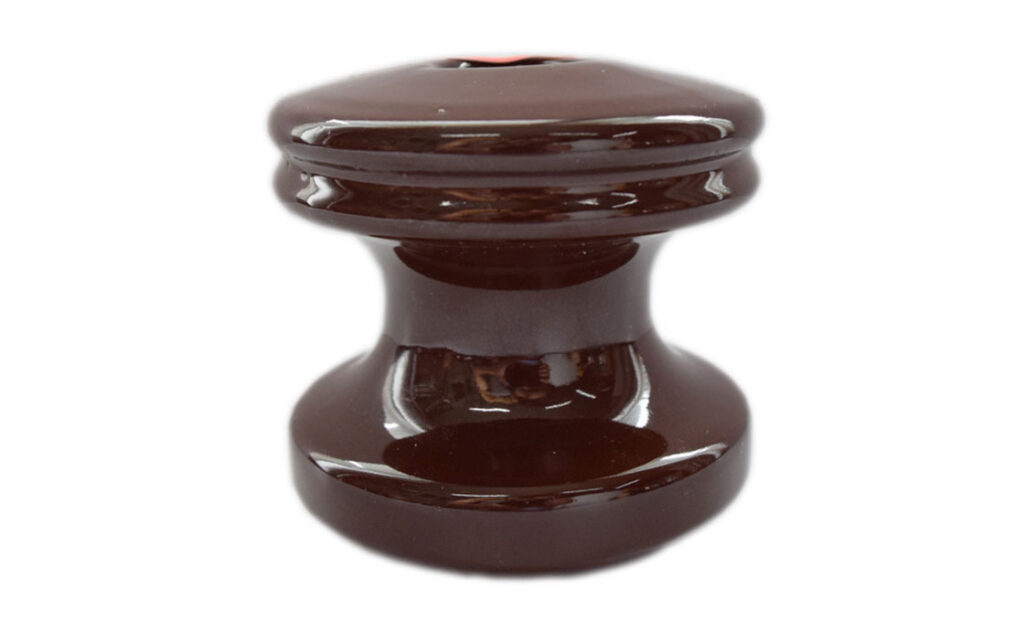
- Electrical insulation of conductors—shackle insulators electrically isolate conductors from poles, brackets, crossarms, and metallic mounting structures. They prevent leakage currents and accidental grounding during the transmission process.
- Mechanical support for overhead conductors—the insulators provide mechanical anchoring and support for conductors used in auxiliary distribution lines and solar networks. They hold cables in position while withstanding conductor tension, wind loading, thermal expansion, and vibration.
- Support for low-voltage distribution systems—insulators provide reliable insulation for lower-voltage overhead line applications. Their durability makes them suitable for large solar developments in remote Argentine regions.
- Conductor routing and line direction control—shackle insulators assist in routing conductors by supporting line deviations and angle changes. They organize cables and ensure structural load balancing.
Technologies aiding the development of YPF Luz’s solar farms in Argentina.
YPF Luz is at the forefront of renewable energy development by implementing sophisticated photovoltaic systems, integrating with the grid, and utilizing digital energy technologies. The El Quemado solar facility in Mendoza province demonstrates how contemporary engineering systems are being combined to enhance efficiency, reliability, and large-scale renewable energy generation capabilities. Frequently utilized technologies encompass:
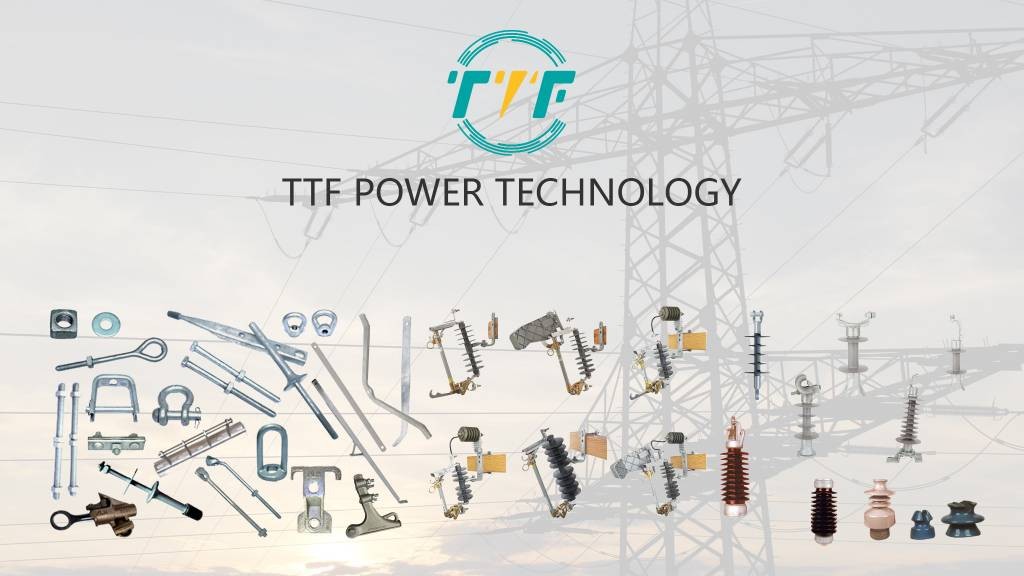
- Solar tracking systems—solar trackers change the position of panels to align with the sun’s path during the day. Single-axis tracking systems can enhance yearly output compared to fixed-tilt setups.
- Bifacial solar panel technology—bifacial panels produce electricity from both surfaces of the module. These modules assist YPF Luz in improving generation efficiency, boosting yearly energy output, and lowering carbon intensity.
- Smart inverter technology – contemporary smart inverters enhance grid stability through dynamic reactive power help and advanced power management.
- High-voltage transmission and substation facilities – the solar farm features transformer stations and grid connection infrastructure linked to the transmission network. These links lessen transmission losses, enhance grid stability, and boost dispatch dependability.