
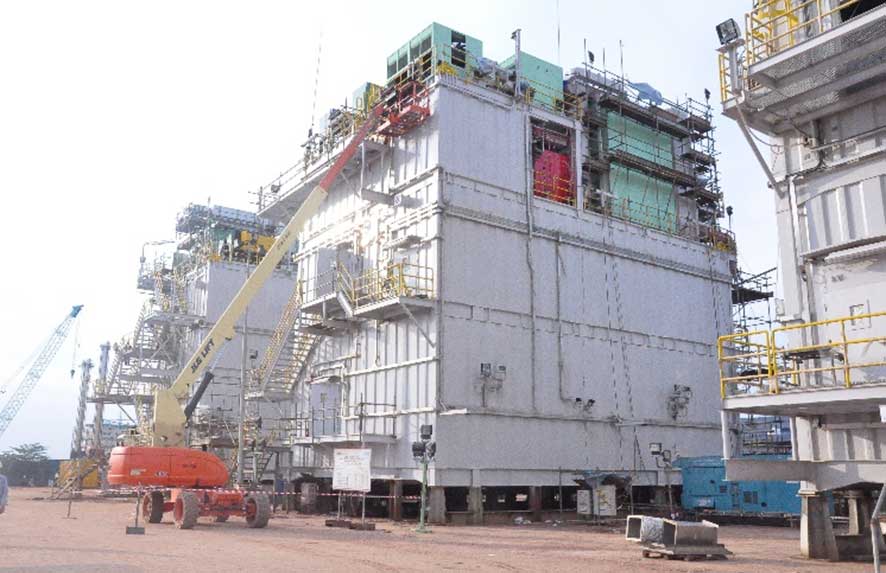
Siemens Energy and SBM Offshore recently selected Siemens Energy to supply recently selected by SBM Offshore to provide power generation and gas compression systems for Petrobras’ platforms in Brazil’s Sergipe-Alagoas basin. The equipment will be installed on floating production, storage, and offloading (FPSO) vessels serving two platforms, P-81 and P-87. Both of these FPSOs will be delivered and operated by SBM Offshore. These vessels will connect to a dedicated gas export pipeline intended to deliver gas from offshore sites to onshore facilities. The FPSOs need a dependable electricity supply for pumps, compressors, separation equipment, control systems, and water treatment. Siemens Energy’s power generation equipment will form an important part of the electrical infrastructure onboard the vessels. The electrical infrastructure requires reliable components capable of operating in harsh marine environments. This creates demand for equipment and hardware such as cable accessories, connectors, helical lead anchors, surge protection equipment, and insulators.
Helical lead anchors are mechanical mooring and connection devices in offshore oil and gas FPSOs. They manage connection and disconnection in subsea riser systems. The steel shafts with helical plates rotate into the ground to serve as deep foundations. They serve as alternatives to traditional concrete foundations for electrical transmission towers and monopoles. Transmission towers face large lateral and overturning loads from wind and unbalanced conductor forces. Helical lead anchors resist these forces that include uplift, compression, and shear demands. The anchors offer fast installation and need no curing time. The steel anchor acts as a direct electrical ground for the attached structure.
Quality assurance is essential for helical lead anchors used in FPSOs and electrical equipment.
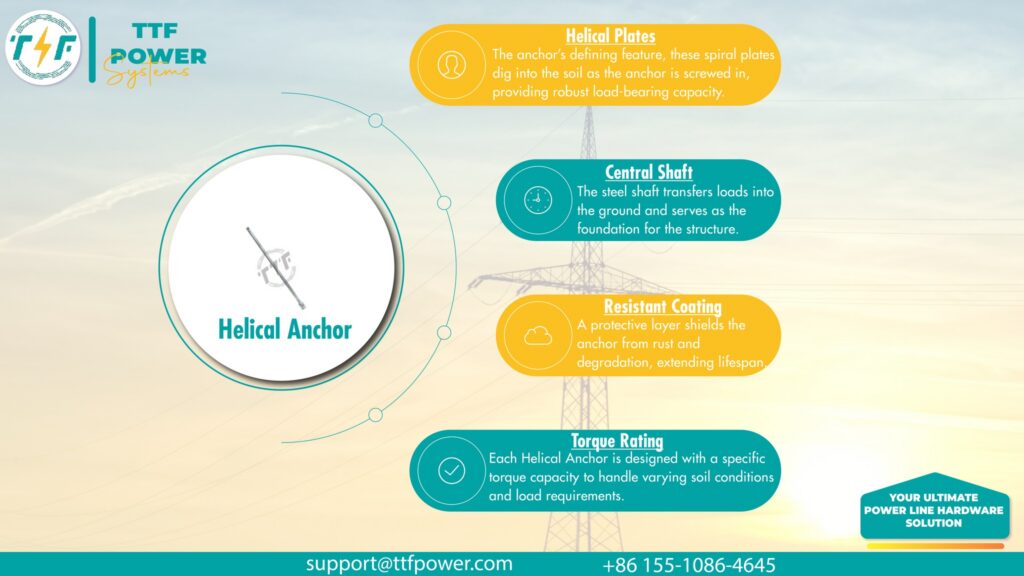
Quality assurance is crucial when helical lead anchors serve around FPSO facilities and electrical equipment. Offshore operations combine high mechanical loads with saltwater exposure, humidity, vibration, hydrocarbons, and demanding maintenance conditions. The QA process verifies material quality, dimensional accuracy, corrosion protection, mechanical performance, and installation compatibility. The process also integrates with applicable project specifications, Brazilian regulations, and international offshore standards. Quality assurance helps identify defects such as cracks, surface discontinuities, burrs, distortion, incomplete forming, corrosion, and dimensional irregularities. A failure in the anchor can affect equipment reliability, electrical safety, and maintenance requirements. Quality assurance covers the entire lifecycle from material procurement and manufacturing to testing, installation, commissioning, and inspection.
The importance of helical lead anchors in FPSOs and electrical equipment
Helical lead anchors serve in mechanical anchoring, equipment support, grounding, and bonding arrangements. The FPSOs also use electrical and mechanical systems to operate in a highly corrosive and vibration-intensive marine environment. Helical lead anchors are therefore essential for reliable anchoring for the systems. Here are their roles in the infrastructure.
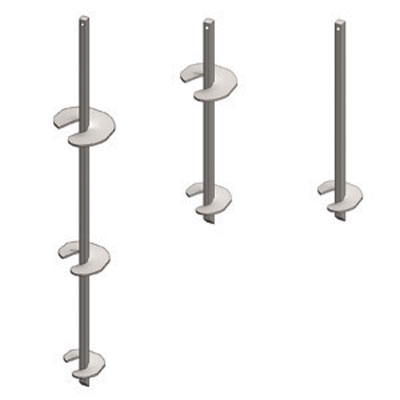
- Providing mechanical anchoring—the helical anchor provides a secure mechanical connection between equipment and the surrounding foundation.
- Supporting electrical equipment—helical lead anchors serve in supporting arrangements for equipment and infrastructure. They support structures with generators, gas compressors, transformers, switchgear, cable-support systems, and electrical cabinets.
- Maintaining equipment stability – the anchors and fastening systems help maintain the position of equipment and structural supports. They reduce the risk of excessive movement, mechanical loosening, and cable-system damage.
- Improving reliability in harsh marine environments—offshore environments create corrosion challenges. Helical lead anchors on FPSOs need material selection, corrosion protection, surface treatment, and mechanical strength.
- Supporting grounding and bonding arrangements—Grounding and bonding arrangements are crucial for fault current paths, equipment protection, electrical continuity, and transient current management.
Gas export pipeline contributions in Brazil’s gas market
The gas export pipeline is an important link between Brazil’s offshore gas resources and its domestic gas market. Petrobras’s Seripe Aguas Profundas (SEAP) projects are being developed to increase national gas availability. Here are their key contributions in Brazil’s gas market.
- Connecting offshore production to onshore demand – the pipeline provides the connection needed to move processed gas from offshore FPSOs toward onshore facilities. The connection allows gas produced offshore to become commercially usable rather than remaining isolated at the production site.
- Increasing domestic gas availability—the project will increase national gas availability with planned processing capacity. The pipeline infrastructure will therefore help convert offshore production capacity into actual market supply.
- Supporting gas-fired power generation—natural gas provides dispatchable generation that complements variable renewable resources.
- Creating infrastructure and equipment demand—the development of an offshore gas export pipeline generated demand for specialized infrastructure.