
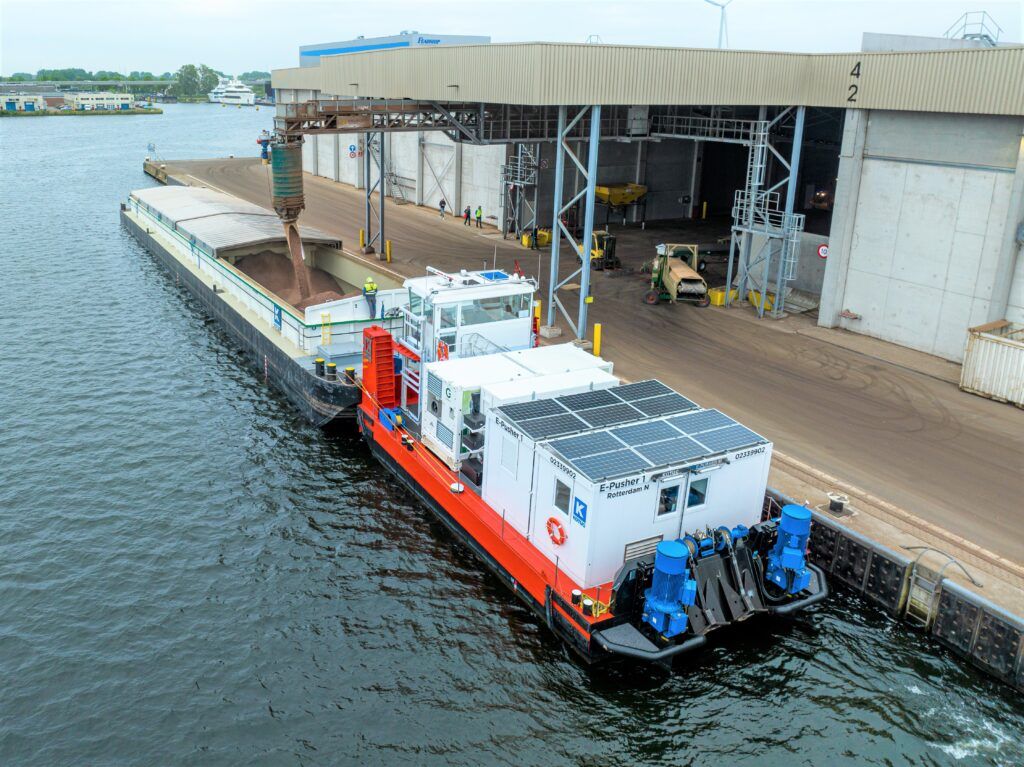
Argentina has achieved a significant milestone in maritime electrification with the launch of the China Zorilla, a 130-meter, entirely battery-electric ferry operated by Buquebus. The boat links Buenos Aires, Argentina, to Colonia del Sacramento, Uruguay. It includes a 41.2 MWh battery system that enables electric propulsion with no direct exhaust emissions while sailing. Corvus Energy is providing the battery energy storage system for the vessels. It is collaborating with Servintel to offer local technical assistance and services in Argentina. This partnership tackles the need for electric shipping, which includes the maintenance, monitoring, and troubleshooting of high-capacity battery systems during their operation. The project will encompass battery storage capabilities, vessel dimensions, passenger limits, propulsion mechanisms, and charging facilities. These connections will need the use of socket eye clevis to provide power for electrification, shore power, and marine charging stations.
Socket eye clevis act as the mechanical link between ball-socket insulators and tension on the high voltage transmission lines that bring electricity from the grid to port charging facilities. The clevis consists of zinc coating that prevents rust and structural degradation caused by salt spray. Socket clevis transmit the high tensile loads of heavy power lines. They provide a flexible joint by combining a ball-socket mechanism with an eye clevis. The flexibility allows power lines to accommodate wind-induced swinging and mechanical vibrations. They help prevent fatigue failure in the supply grid.
Quality assurance for socket eye clevis used in marine energy storage systems and onshore charging stations
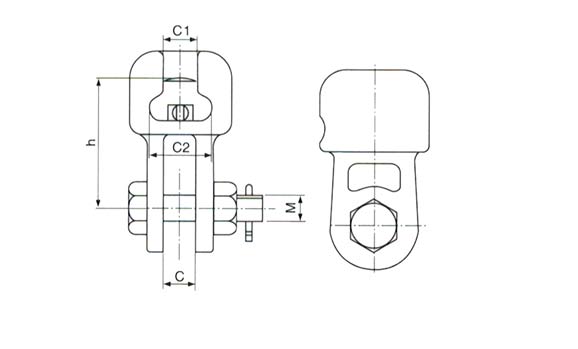
Argentina’s energy transition creates demand for reliable electrical infrastructure across marine energy projects, BESS, and electric vehicle charging networks. A socket eye clevis joins insulators, support fittings, suspension assemblies, and other mechanical components in electrical infrastructure. Socket eye clevis fittings form part of designated support, suspension, or electrical equipment connection assemblies. Their suitability depends on installation design and the loads to withstand. Quality assurance helps manufacturers verify that each socket eye clevis meets the required dimensional, mechanical, material, and corrosion-resistance specifications. QA covers material quality and selection, dimensional accuracy inspection, manufacturing inspection, mechanical strength and load testing, and corrosion resistance protection. During manufacturing, the team inspects the fitting throughout forging, heat treatment, machining, and finishing. They also inspect surface cracks, forging laps and folds, sharp edges and burrs, and incomplete machining. QA verifies that the fittings can withstand the specified loads without excessive deformation, cracking, or separation.
The roles of socket eye clevis in marine energy storage systems and charging infrastructure in Argentina
Marine energy storage and charging infrastructure depend on reliable mechanical connections to support equipment in ports and vessels. The socket eye clevis links components in electrical and structural assemblies. Here are the roles of the clevis in marine energy storage systems in Argentina.
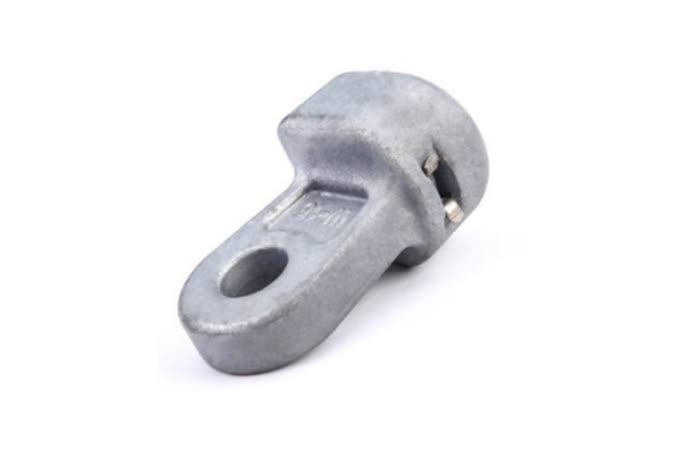
- Connecting mechanical support assemblies: marine energy storage systems contain battery modules, equipment enclosures, cable support structures, and electrical equipment. The eye clevis can join ball fittings, insulator strings, or other hardware.
- Supporting mechanical stability under vessel movement: socket eye clevis maintain secure connections between compatible components. Their design allows them to transfer specified tensile loads without relying on improvised fastening arrangements.
- Connecting insulator and support hardware: socket eye clevis can connect compatible ball-and-socket insulator hardware. It helps secure the insulator within the mechanical assembly and transfers the specified mechanical load through the connection.
- Maintaining connection alignment: the clevis accommodates the articulation allowed by its ball-and socket connection. This helps prevent bending forces on connected components.
- Supporting marine equipment maintenance: Socket eye clevis provide defined mechanical connection points. This helps maintenance teams inspect for cracks, corrosion, pin wear and deformation.
The impact of Corvus Energy on the maritime industry in Argentina
Marine battery systems, power management tools, electrical protection devices, and dedicated maintenance services are necessary for ship operators to support vessels utilizing electric propulsion. The technical impact of Corvus Energy goes further than just providing batteries. The collaboration with Servintel offers local technical assistance, equipment upkeep, and training for engineering staff utilizing Corvus Energy battery systems. These advancements impact ship design, electrical engineering, marine upkeep, and the enhancement of technical expertise in Argentina. The installation demonstrates that battery technology can power large commercial passenger and vehicle ferries, rather than being limited to smaller vessels on brief routes. Moreover, battery-electric propulsion alters how ships produce, distribute, and utilize electrical energy.