
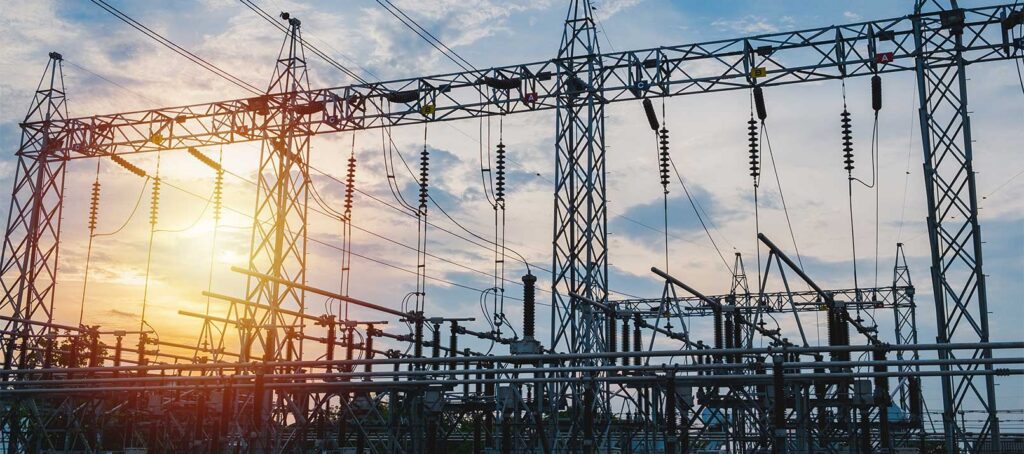
BHP plans to sell about US$1.5 billion in power transmission assets in Chile, including 1,000km of transmission lines. These transmission lines supply electricity to its Escondida, Spence, and Cerro Colorado copper operations. BHP is also pursuing large-scale investments in Chilean copper production. Much of the investment will be directed to mine expansions, concentrator upgrades, renewable energy integration, and production growth. The sale will allow BHP to unlock capital tied up in infrastructure while maintaining access to reliable power through service agreements with future owners. The mining operations need high-capacity electricity supplies to power crushers, concentrators, pumps, desalination systems, and mineral processing facilities. Transmission assets will attract investments from infrastructure investment funds, pension funds seeking stable returns, and transmission utilities operating in Chile. This could increase demand for transmission components such as suspension clamps, dead-end clamps, line post studs, steel eye nuts, and guy deadends.
Guy deadends provide stability and safety for the electrical infrastructure powering operations. They securely anchor guy wires, which stabilize utility poles and transmission towers against extreme forces. The deadends anchor guy wires that support power poles and transmission towers. They prevent structures from collapsing under the tension of heavy power lines, wind loads, and seismic activity. They prevent the sagging of power lines by maintaining a consistent and reliable power supply. Any interruptions in Chilean copper mines can halt heavy machinery, crushers, and processing plants. Additionally, guyed derricks anchor long-distance, high-voltage transmission lines carrying electricity from renewable energy sources to remote mine sites. They support the industry’s push toward decarbonization and the use of cleaner energy.
Quality assurance for guy deadends used in power transmission networks in Chile
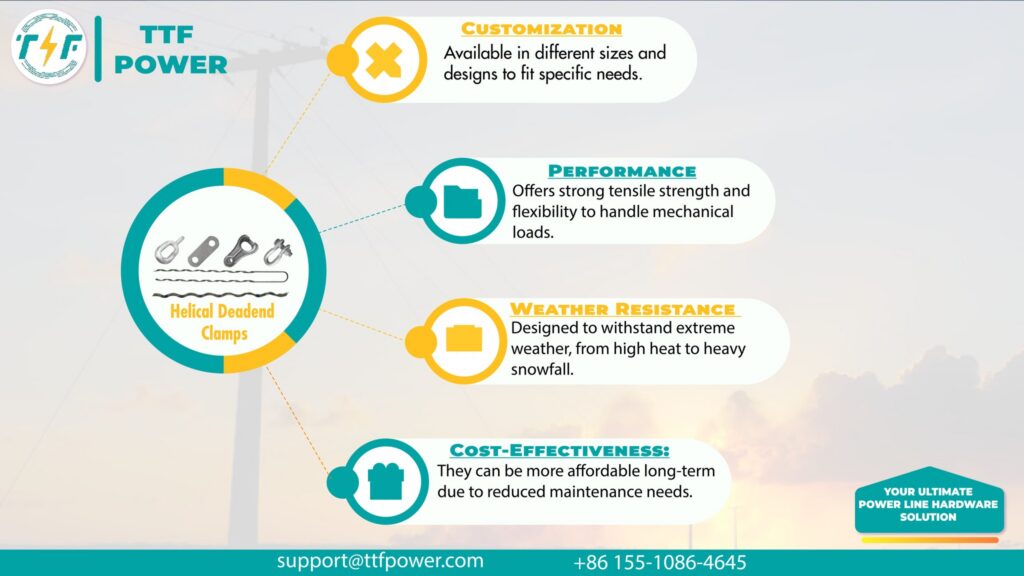
Conducting quality assurance for the guy deadends helps them provide the mechanical termination and anchoring of guy wires. The guy wires then stabilize poles, transmission structures, and substation equipment. QA helps detect failures that lead to pole instability, transmission line outages, increased maintenance costs, and reduced network reliability. Regular inspections help identify wear, corrosion, or mechanical damage before failures occur. The QA process includes material quality verification, mechanical strength testing, dimensional accuracy verification, grip performance verification, and seismic performance evaluation. It also includes environmental testing, manufacturing process control, and documentation and certification. Implementing QA helps utilities ensure long-term reliability, safety, and structural stability of transmission infrastructure in Chile’s environmental and seismic conditions.
The functions of the guy deadends in power transmission networks
Guy deadends terminate and secure guy wires that provide stability and support to poles, towers, and utility structures. They are crucial in power transmission networks and mining operations located in challenging environments in Chile. The deadends maintain structural integrity and operational reliability in Chile. Here are the functions of the deadends in power transmission networks in Chile.
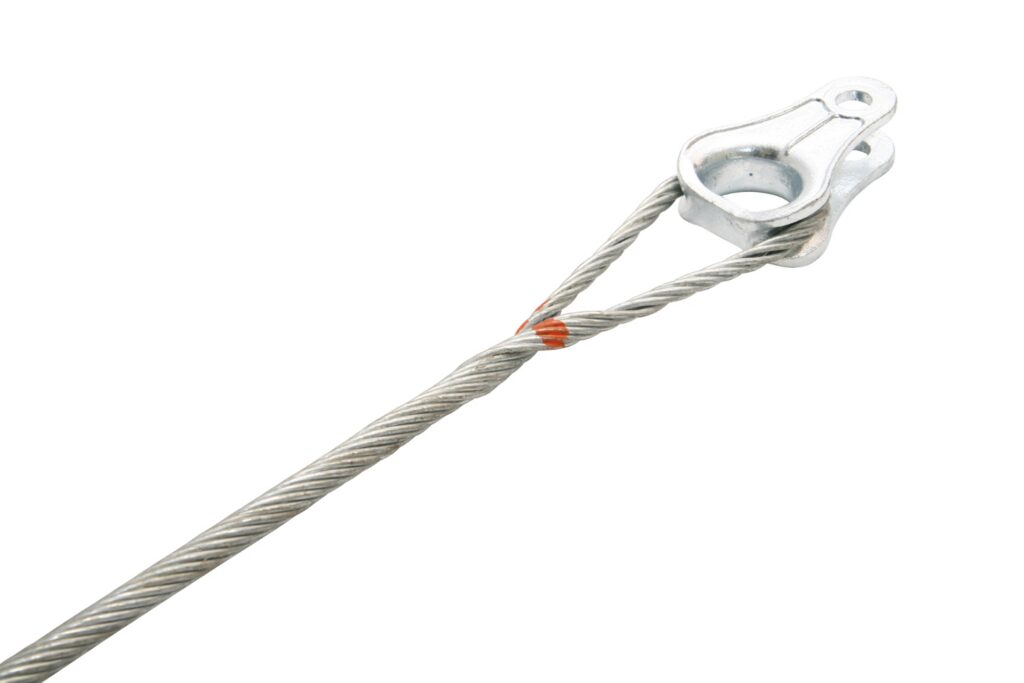
- Providing structural stability—the dead end anchors structures and foundations and protects infrastructure from forces. They prevent excessive movement of transmission poles and utility structures.
- Supporting transmission and distribution poles—the deadends serve on angle poles, deadend poles, terminal structures, and mountain transmission routes. Guy deadends transfer loads through guy wires into anchor systems embedded in the ground.
- Maintain network reliability – power interruptions cause consequences in mining regions where electricity supply is crucial. The deadends prevent pole displacement, maintain conductor clearances, and reduce structural stress.
- Supporting renewable energy transmission—guy deadends support the infrastructure connecting renewable energy facilities to the grid. They stabilize transmission poles, collector line structures, and communication network supports.
Impacts of integrating power line hardware with mining operations in Chile
The integration of power line hardware and transmission infrastructure with mining operations in Chile is crucial in the expansion of copper production, renewable energy deployment, and electrification initiatives. Reliable transmission networks supported by high-power line hardware ensure energy delivery to mines and processing facilities. Key impacts include:
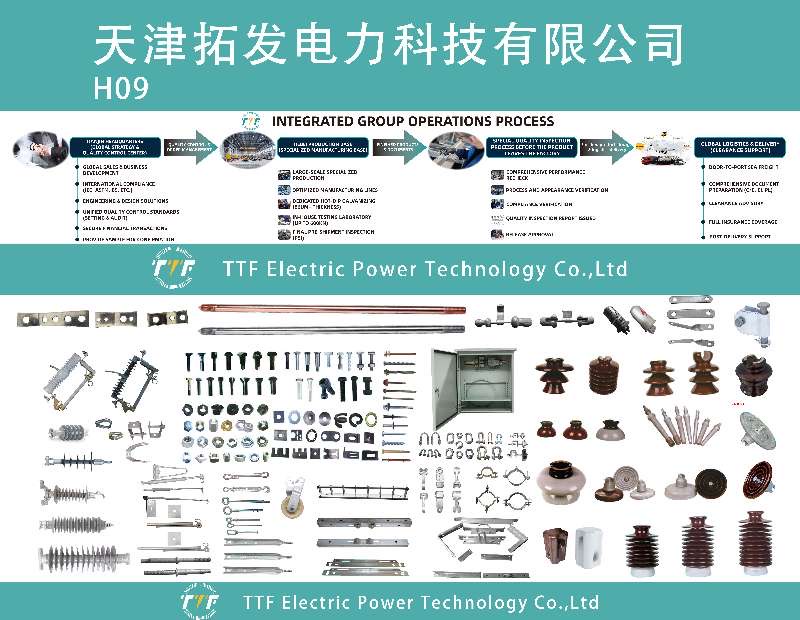
- Improved energy reliability for mining operations—power line hardware such as suspension clamps, deadend clamps, guy deadends, insulators, and conductor fittings maintain structural and electrical integrity of transmission lines.
- Increased copper production capacity – the integration of transmission systems enables mining companies to expand existing operations, develop new mining projects, and increase processing capacity.
- Enhanced renewable energy integration—transmission infrastructure eases the connection of solar farms to mining operations and the integration of wind power projects. Mining companies use renewable electricity to lower operating costs and reduce carbon emissions.
- Support for mine electrification—the mining industry is adopting electrification technologies for decarbonization goals. These include electric haul trucks, battery-electric mining equipment, and electrified conveyor systems.