
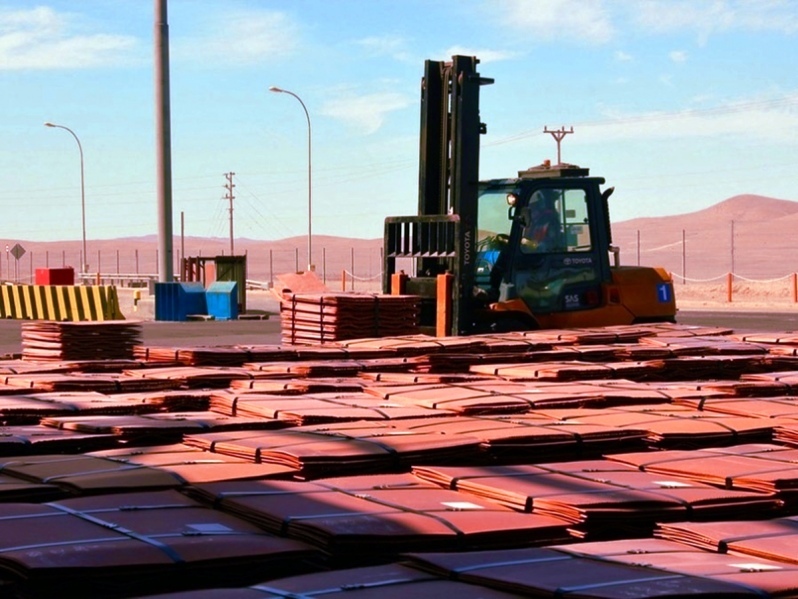
BHP and Lundin mining firms released their preliminary economic assessment for the Vicuna project in Argentina. It has the potential to produce more than 500,000 tonnes of copper per year. The project comprises the Josemaria deposit in San Juan Province and the Filo del Sol deposit in the Antofagasta Region. With projected expenditures of $18.1 billion across the three development stages and $30.3 billion over its cycle, it will influence Chile’s energy sector. Large-scale copper and gold mining operations need intensive energy during crushing and grinding, flotation and processing, and water pumping and desalination. This will strengthen long-term power purchase agreements, speed up new generation capacity additions, and reinforce transmission infrastructure connecting remote mining zones to generation hubs. Remote high-altitude mining operations need high-voltage transmission lines, substations, and reactive power compensation systems. These interconnections rely on lightning foundation anchors for stability.
Lightning foundation anchors provide a low-resistance path for electrical current to safely dissipate into the earth in case of a fault. It protects workers from electric shocks and prevents damage to sensitive equipment and electronics from electrical surges. The anchors provide physical stability to various structures in the mining sector. It includes securing solar panels used to power operations and stabilize well casings in brine extraction. Modern mines depend on automated control systems, sensors, and communication networks. The grounding systems protect sensitive electronic equipment from electromagnetic interference and help dissipate static electricity. Lightning foundation anchors protect extensive conveyor belt systems, crushers, and processing plants from lightning strikes and electrical faults.
Quality assurance for lightning foundation anchors for use in Chile’s mining sector
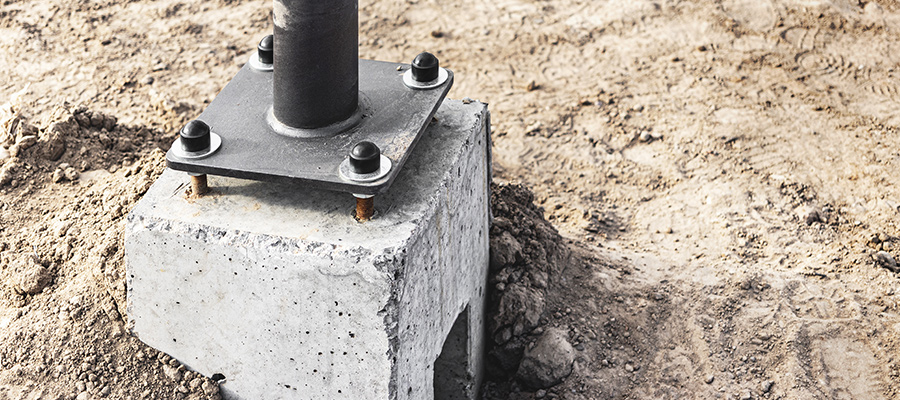
Quality assurance helps align the anchors with international and national standards in Chile’s mining-intensive regions. The anchor is a crucial component in open-pit and underground operations where electrical infrastructure, communication systems, and personnel safety face high lightning incidence rates. Compliance with standards ensures that anchor design, materials, and installation meet safety thresholds for conductivity, mechanical strength, and corrosion resistance. The quality assurance needs include material specifications, mill test reports, and incoming inspections. These activities ensure anchor materials deliver low-resistance paths and long-term durability. During installation, quality assurance includes pre-installation checks, installation controls, and real-time field records. The assurance system ensures that lightning anchoring systems provide reliable grounding paths, reduce electrical hazards, and maintain operational integrity.
Functions of lightning foundation anchors in Chile’s mining infrastructure
Lightning foundation anchors are integrated components of the lightning protection and grounding system. The anchors perform dual mechanical and electrical functions in Chile’s mining infrastructure. The anchors are a foundational component of resilient and compliant infrastructure systems. Its key functions are as discussed below.
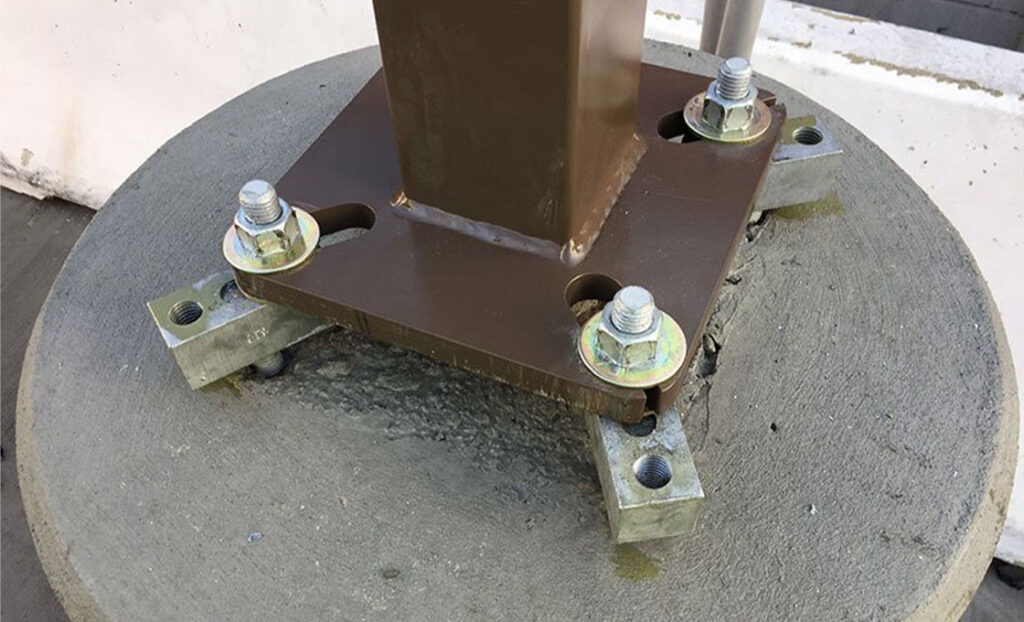
- Structural stabilization of lightning protection systems—lightning foundation anchors secure air terminals, shield wires, lightning masts, and surge protection structures near substations. The anchors transfer tensile and shear loads from lightning masts into stable soil strata.
- Low-resistance path for lightning current dissipation—the anchors increase contact surface area with soil, improve grounding effectiveness, and reduce step and touch hazards. They prevent voltage gradients around equipment and personnel zones.
- Protection of high-value electrical infrastructure—lightning foundation anchors help protect the assets by stabilizing the grounding network. The anchors support surge arresters, transformers, switchgear, SCADA, and control systems.
- Integration with grounding grids and earthing systems—grounding systems consist of grounding grids, ground rods, ring earth systems, and bonding networks. Lightning foundation anchors increase grounding network depth and improve current dispersion into lower-resistivity soil layers.
The roles of copper and gold minerals in Chile’s energy transition
Copper in Chile plays a crucial role in electrification, grid expansion, renewable energy systems, and financial stabilization. Gold helps reinforce economic resilience and enables higher-performance electronic systems. The metals position Chile as a mineral exporter and a crucial actor in clean energy transformation. Key roles include:
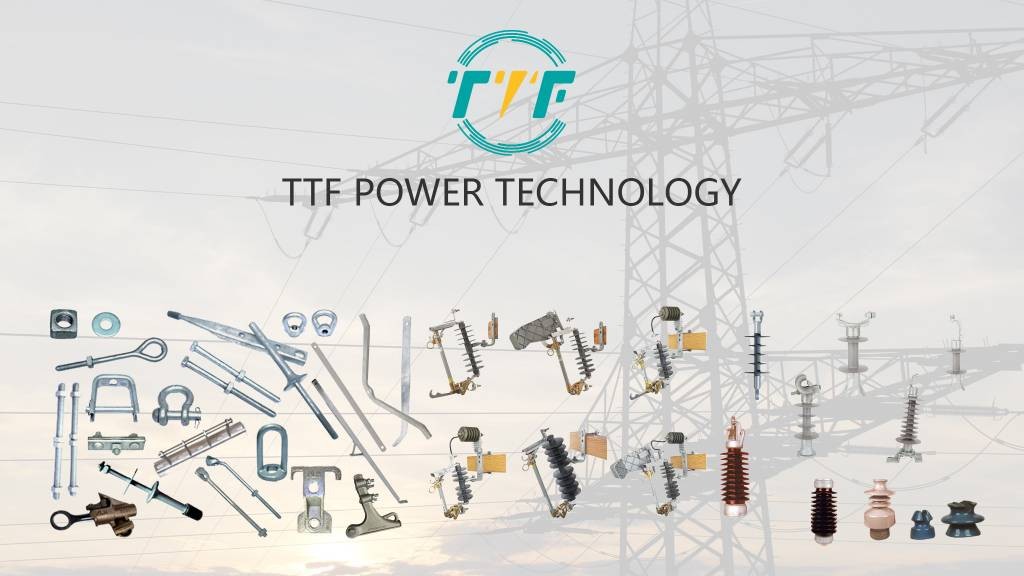
- Electrification—copper is critical in solar PV systems, wind turbines, BESS, and high-voltage substations and switchgear. It is also crucial in high-voltage transmission cables, transformers, grounding systems, and smart grid components.
- Green hydrogen—copper also serves in electrolyzers, rectifiers, and power systems in hydrogen plants. The expansion of transmission infrastructure supporting large-scale electrolysis also expands demand for copper.
- Financial stability and high-reliability applications—revenue from gold and copper production supports mining royalties and foreign exchange earnings. This helps fund renewable energy subsidies, transmission expansion, grid modernization, and electrification programs.
- Decarbonizing copper and gold production—EV manufacturers and renewable equipment suppliers demand low-carbon copper for lower embedded emissions.