

The Pata Mora project in Argentina’s province of Mendoza represents a structural effort to transform the regional productive matrix. It is considered a services and infrastructure hub that aims to organize and support productive development without repeating the isolated schemes of the past. The project is also a planned engine of territorial integration, economic diversification, and sustained industrial production. This development will shape infrastructure, logistics, and services to support large-scale industrial activity. The project also includes upgrades and construction of transport lines that will improve the movement of inputs and outputs for industrial users. Improved transport and utilities reduce operational challenges for large producers. This makes it workable for firms to scale operations. It also leads to enhanced energy infrastructure that attracts capital-intensive investors in mining and renewable energy integration. Using the socket clamp in this development provides an engineered solution to fix anomalies found during construction.
The pole clamp ensures the long-term structural integrity and safety of the entire infrastructure. It is an essential component for enhancing national energy infrastructure in Argentina. The socket clamp provides a logistical advantage by providing a faster and highly reliable solution to welding. Socket clamps enable live connections without shutting down the gas supply. Additionally, it allows for the future growth of the gas distribution network in a modular and efficient way to fuel industrial development.
Using the socket clamp speeds up construction, future modifications and reduces operational interruptions. It provides the flexible and non-disruptive connection points to feed new large-scale industries with gas from Vaca Muerta. The clamp reduces the time the pipeline is out of service compared to a welded repair. It ensures greater reliability and continuity of supply in Argentina’s energy sector.
Uses of the socket clamp in Argentina’s infrastructure development
The socket clamp is a mechanical pipe clamp used in piping systems in Argentina’s infrastructure and logistics development. It works in industrial, transport, water, and energy infrastructure development. The socket clamp helps ensure reliability, safety, and continuity of large-scale systems. This ensures the infrastructure networks function seamlessly and supports Argentina’s broader economic development goals. Here are the functions of the socket clamps in infrastructure development.

- Structural stability in piping networks—a socket clamp secures two sections of pipe to prevent separation under internal pressure. The clamp encircles the pipe joint, tightly fastening the connection. They reduce breakdowns that interrupt logistics flows and industrial production.
- Prevention of joint separation and leakage—the clamp restrains pipe fittings so they do not pull under stresses. They provide a mechanical lock that resists internal pressure that might push apart at the joint.
- Support in high-pressure and high-load environments—the socket clamp maintains integrity when pipelines face mechanical stresses. They help resist pressure surges, temperature fluctuations, and load stresses from ground movement.
- Ease of maintenance, expansion, and upgrades—the clamps allow easier disassembly for maintenance, inspection, or network expansion. Their use of bolts and removable hardware allows the sections of pipelines to be accessed with minimal disturbance to connected systems.
Core infrastructure components supporting Argentina’s energy sector
The development of Argentina’s energy sector relies on a set of core infrastructure components that enable generation, transmission, distribution, and large-scale industrial use of energy. This development is crucial with advances in hydrocarbons, renewables, and grid modernization. These components form the physical and operational structure that sustains reliability, scalability, and competitiveness in the energy system. These components include:
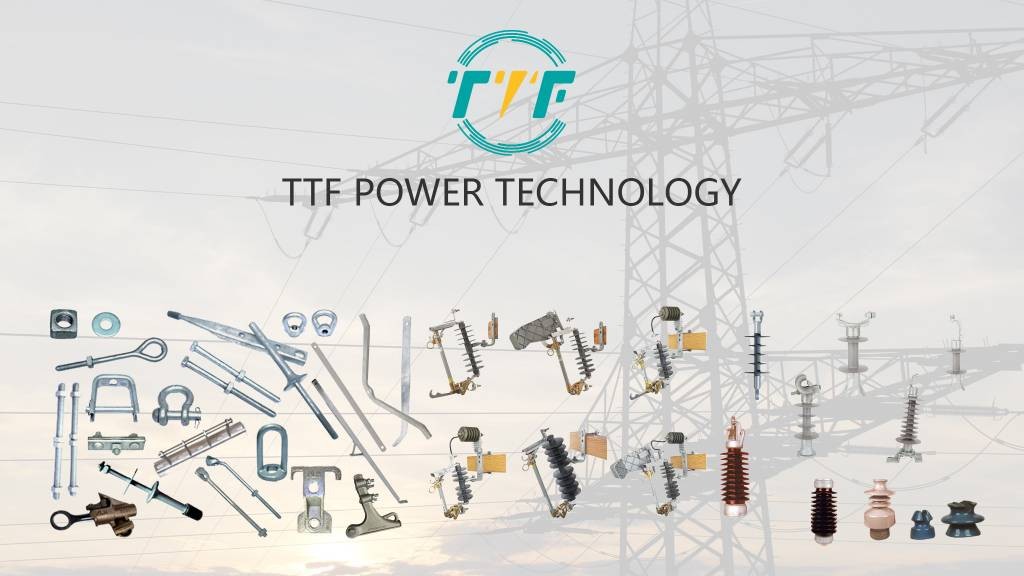
- Power generation infrastructure—this includes thermal power plants, hydropower facilities, solar and wind parks, and emerging energy technologies. These generation assets anchor the transition toward a more resilient and diversified energy mix.
- Transmission network and high-voltage infrastructure—this allows power to flow from resource-rich regions to consumption areas. It includes extra-high-voltage lines, substations, switchyards, insulators, conductors, towers, and hardware components such as socket clamps.
- Distribution systems—distribution infrastructure ensures that energy reaches industrial, commercial, and residential users. The infrastructure includes medium- and low-voltage lines, transformers, protection devices, and industrial distribution networks.
- Oil and gas transport infrastructure—this includes pipelines for crude oil, natural gas, and refined products. It also includes compressor stations, pumping stations, and storage terminals. The developments rely on mechanical components such as clamps, valves, flanges, and joint restraints. These components ensure structural integrity and leak prevention.