
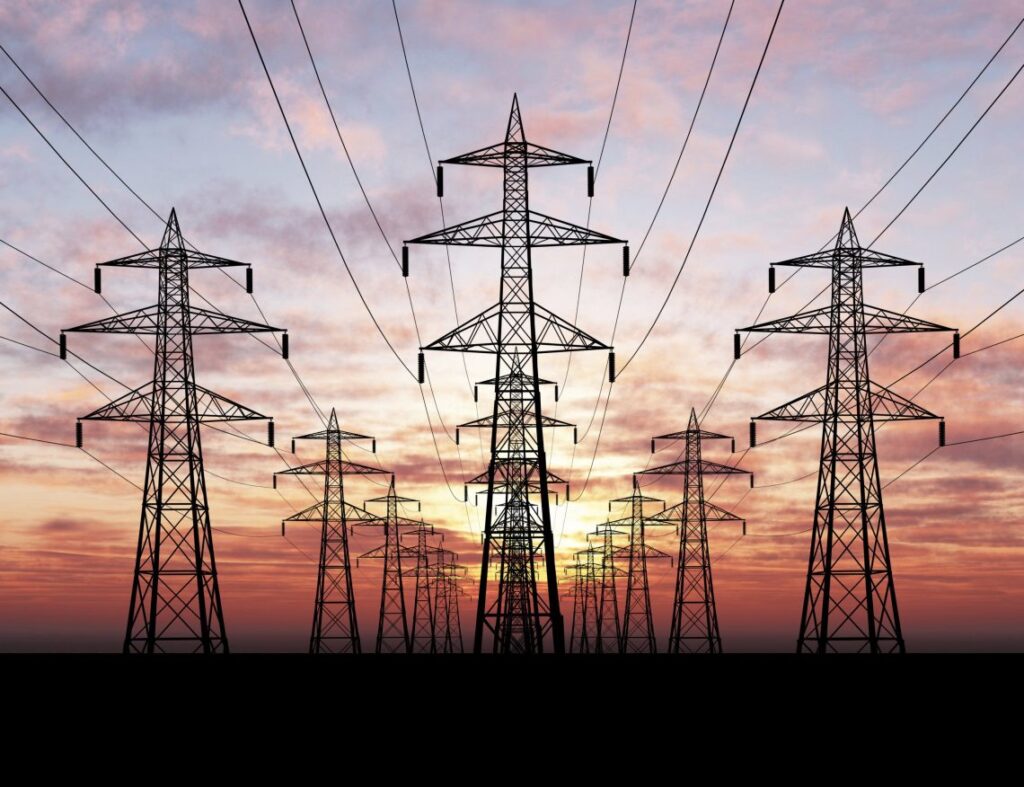
Argentina plans to privatize the majority of the state-owned power transport firm Transener. Transener is the South American nation’s main high-voltage power transmission company. Transener operates the backbone of Argentina’s high-voltage transmission network, which makes it a natural monopoly. Control over the infrastructure affects grid reliability, dispatch efficiency, and integration of renewable energy. With the three bids emerging, investors will be pricing in regulatory risk, currency volatility and capital controls, and infrastructure upgrades. The privately controlled Transener could speed up grid modernization and digitalization and expansion of transmission capacity to support wind and solar projects. It will also improve technical efficiency and reduce transmission losses. High-voltage transmission networks rely on insulator side ties to fasten a conductor to the side of an insulator on a utility pole. The side ties maintain the conductor’s correct alignment and spacing to ensure mechanical stability and electrical reliability.
Insulator side ties provide a firm grip to hold the conductor against environmental forces like wind, ice, and vibration. The side ties are engineered to reduce abrasion caused by conductor motion, which extends the conductor’s service life. They distribute mechanical loads across the conductor and insulator to avoid localized stress points that could lead to failure. Side ties help maintain the necessary insulation gap between the conductor and the support structure. It mitigates issues like radio influence voltage and prevents leakage currents. Insulator side ties are from materials such as aluminum-clad steel, galvanized steel, and UV-resistant PVC. The selection of the side tie depends on the voltage, conductor type, and mechanical loads of the installation.
Quality assurance for insulator side ties used in high-voltage transmission networks
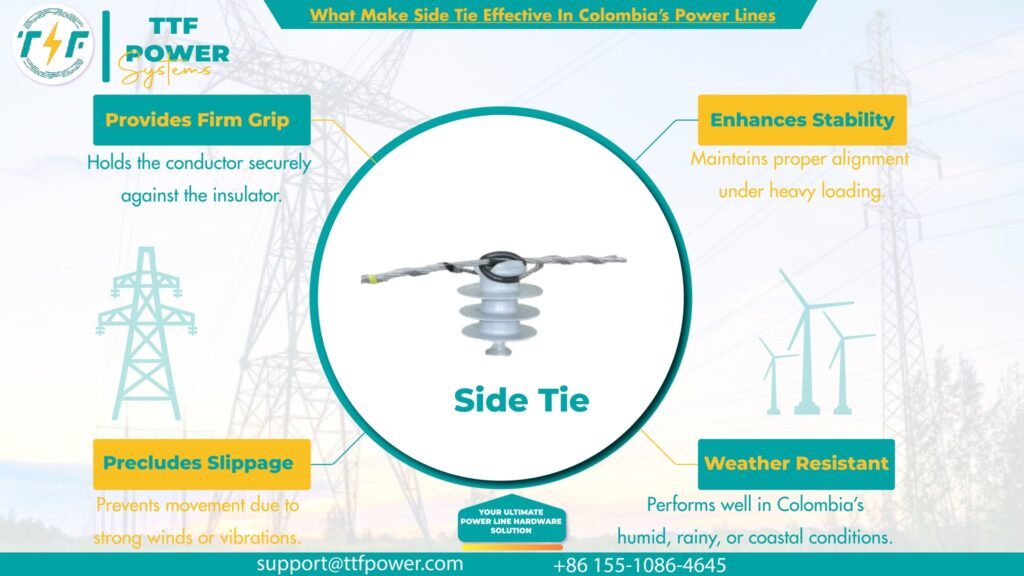
Quality assurance for insulator side tie in high-voltage transmission networks affects conductor retention, insulator integrity, and line reliability. Failures in insulator side ties show as conductor slippage, abrasion damage, or insulator wear, which can lead to outages. Quality assurance begins with strict material verification through chemical composition testing, mechanical properties, and corrosion resistance validation. Insulator side ties must also match conductor diameter and insulator geometry. QA checks include diameter tolerance verification, preformed geometry inspection, and fit validation against standard insulator profiles. Other processes include surface finish and coating integrity, mechanical performance testing, electrical performance testing, electrical performance considerations, and installation quality control. QA ensures the side ties secure conductors under dynamic electrical and environmental loads. It prevents failures that can result in system-level reliability issues.
Key roles of insulator side ties in a high-voltage transmission network in Argentina
Insulator side ties act at the conductor-insulator interface, where mechanical stability and electrical integrity are crucial under continuous stress. They are crucial in Transener’s infrastructure due to long spans, environmental variability, and the need for high reliability. The functional integrity of the side ties impacts line performance and lifecycle resilience. Here are the roles of insulator side ties in high-voltage transmission lines.
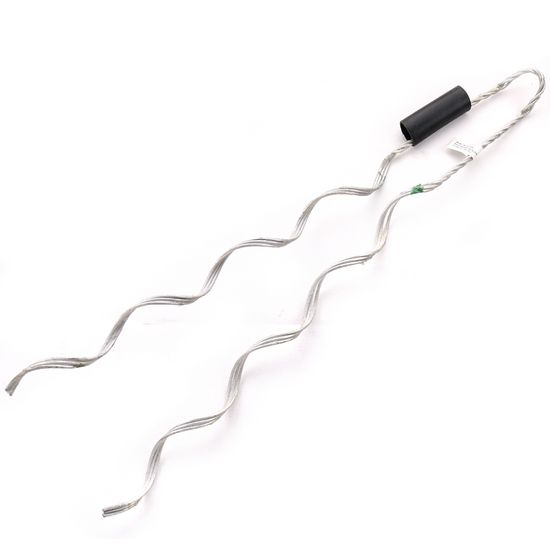
- Conductor retention and positional stability – the side tie secures the phase conductors onto the insulator. They prevent lateral displacement due to wind, ice loading, and electromagnetic forces.
- Load transfer and mechanical support – side ties contribute to transferring mechanical loads from the conductor to the insulator and to the tower. It absorbs dynamic loads from aeolian vibration and galloping.
- Protection against conductor damage – side ties provide a controlled contact interface, prevent strand separation, and extend conductor service life by reducing mechanical degradation.
- Electrical field control and insulation coordination—insulator side ties influence the local electric field, which helps maintain consistent conductor positioning. It also reduces the risk of localized field intensification that could trigger corona discharge.
Impacts of investments in Transener’s infrastructure in Argentina
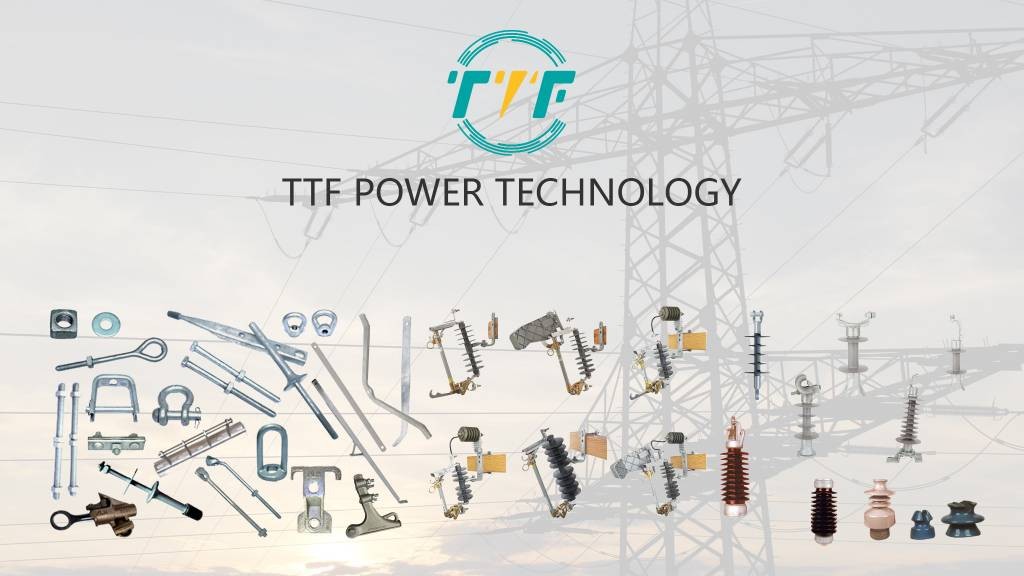
Investments in Transener reinforces both system reliability and Argentina’s broader energy transition. Investments will replace deteriorated conductors, towers, and insulators, upgrade substations, and reduce forced outages and technical losses. The investments will also enable new high-voltage corridors, increase transfer capacity to relieve bottlenecks, improve dispatch flexibility, and lower the curtailment of generation. These investments will also support the local production of insulator side ties to secure the conductors on transmission networks. Upgrading the transmission network supports scaling of renewables through extension of lines to connect remote wind and solar zones. It also helps reinforce weak nodes to handle intermittency and reverse power flows. The investments are essential to meeting decarbonization targets and reducing reliance on thermal peaking plants.