

Peru is advocating for the rapid development of mining investment and electricity infrastructure. The Prime Minister, Luis Galarreta, informed the congress that the government anticipates approving 240 mining projects in 2026. These initiatives will encompass exploration, exploitation, and beneficiation permits. The sector anticipates that the six generation projects will begin operation by July 2027, contributing 1,096 MW of installed capacity. This approval signifies an effort to minimize administrative hold-ups and establish a more consistent atmosphere for mining stakeholders. The growth might encourage investment in exploration, extraction, mineral processing, transportation, pumping, ventilation, and electrification. It will additionally advocate for the growth and unification of power transmission systems and equipment, including insulator brackets. The infrastructure will assist in providing energy for crushers, mills, conveyors, pumps, processing facilities, ventilation systems, and water treatment. Furthermore, the government intends to enhance generation growth with extra transmission initiatives.
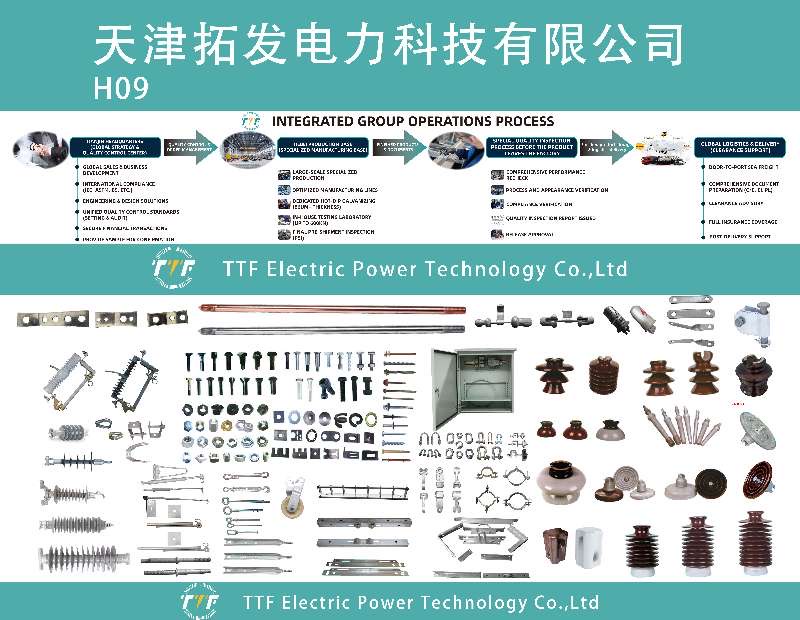
Insulator brackets are specialized pipe supports that offer thermal insulation, electrical isolation for cathodic protection, and structural support with vibration control. Insulator brackets incorporate a high-performance insulating layer that consists of ceramic fiber or high-density polyurethane foam. They reduce heat loss to the surrounding infrastructure. This helps improve energy efficiency and maintains the needed temperature for the crude to flow. They also prevent damage to the pipeline’s outer protective coating from high temperatures. The materials for the insulator brackets allow it to hold the pipe within the casing while preventing any electrical contact between them. This creates electrical isolation that ensures that the protective current from the cathodic protection system is not drained out by the casing.
Quality assurance for insulator brackets used in mining and power generation

Insulator brackets secure insulators to poles, crossarms, steel structures, and switchgear supports. The brackets may operate under high electrical loads, mechanical stress, vibration, dust, humidity, and corrosive conditions. Quality assurance ensures that the brackets maintain structural integrity and provides reliable support. The process includes raw material verification, dimensional accuracy, mechanical load testing, welding quality control, and corrosion protection. It also includes surface finish inspection, electrical clearance considerations, fit and assembly verification, and load path and structural inspection. During manufacturing, QA conducts cutting and forming, hole punching, welding, surface preparation, galvanizing, mechanical testing, and packaging. Reliable insulator brackets support Peru’s industry by supporting electrical infrastructure to operate mills, crushers, pumps, ventilation systems, and processing plants. Quality control prevents misalignment, excessive mechanical stress, insulator damage, conductor instability, or eventual structural failure.
Significance of insulator brackets in Peru’s mining and power generation infrastructure
Insulator brackets offer mechanical support in electrical systems supporting mining operations. They secure insulators to poles, crossarms, substations, and switchgear structures. Insulator brackets help maintain the physical configuration needed for safe and reliable power transmission and distribution. Here is the importance of insulator brackets in the infrastructure.

- Maintaining mechanical support for insulators—the insulator brackets provide a secure mechanical interface between the insulator and its supporting structure. The bracket must withstand the mechanical forces transferred through its chain.
- Supporting reliable power supply to mines—the brackets help maintain stable conductor and insulator assemblies on the networks supplying mines. They contribute to insulator displacement, conductor instability, or electrical faults.
- Maintaining electrical clearances—the bracket maintains phase-to-phase clearance, phase-to-phase, conductor positioning, and insulator orientation.
- Improving transmission and distribution reliability—Insulator brackets help reduce mechanical failures at individual support points. They help the electricity system to accommodate changing demand and improve reliability
Roles of investments in Peru’s energy sector on mining and power generation infrastructure
Funding in mining and energy production will aid in the establishment of new mines, processing plants, and industrial initiatives. The mining investment portfolio of Peru includes 66 projects, representing an estimated potential investment of US $64.075 billion. This is how investments bolster the industry.
- Rising electricity demand—investments generate a need for generation capacity, transmission lines, substations, transformers, and grid protection systems.
- Increasing generation capacity—new generation initiatives can enhance the available electricity supply, boost system adequacy, and ease new industrial connections.
- Enhancing transmission infrastructure—investment in generation facilitates the movement of electricity from power stations to mining sites, industrial plants, and various demand hubs.
- Aiding electrification and decarbonization—investing in power generation offers Peru a chance to enhance the contribution of renewable energy in its electricity network. Solar and wind energy enhance hydropower and thermal energy production.